Anisonema: taxon details and analytics
- Domain
- Kingdom
- Protozoa
- Phylum
- Euglenozoa
- Class
- Euglenida
- Order
- Anisonemida
- Family
- Anisonemidae
- Genus
- Anisonema
- Species
- Scientific Name
- Anisonema
Summary description from Wikipedia:
Anisonema
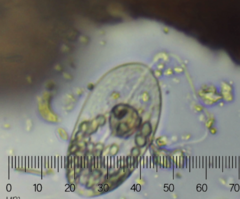
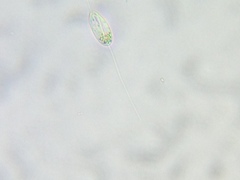
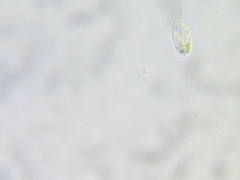
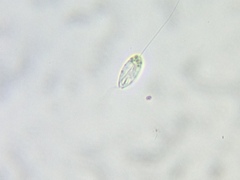
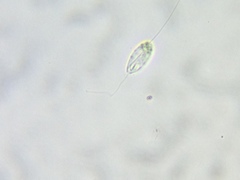
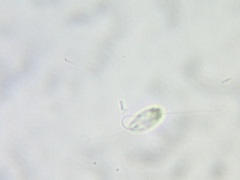
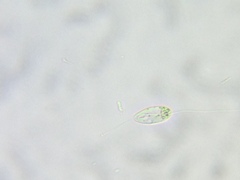
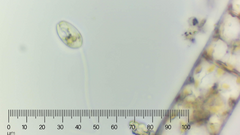
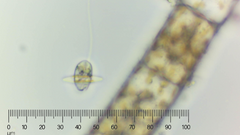
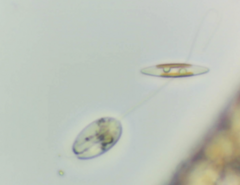
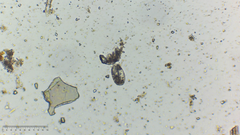
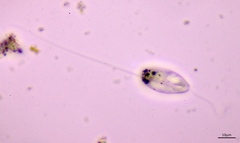
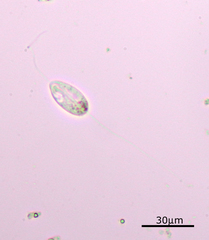
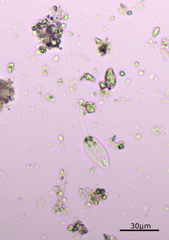
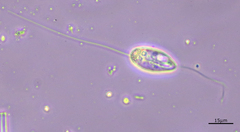
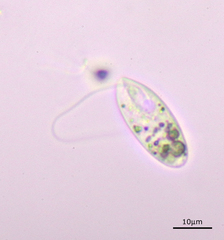
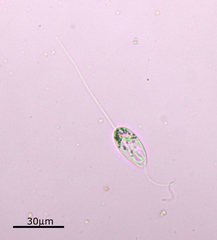
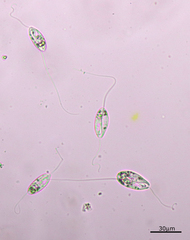
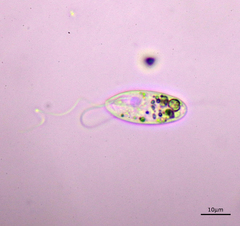
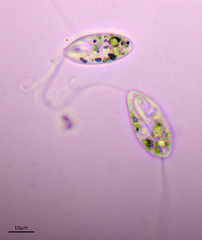
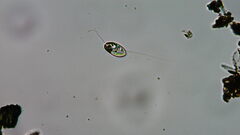
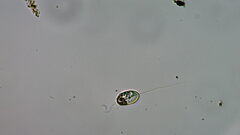
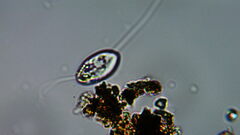
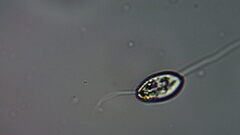
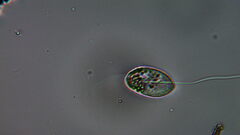
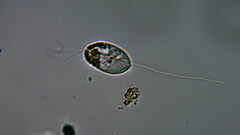
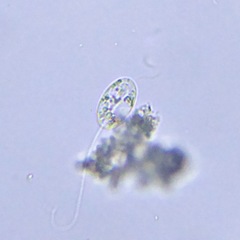
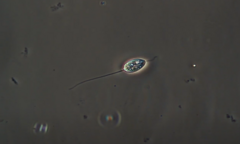
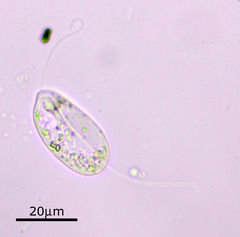
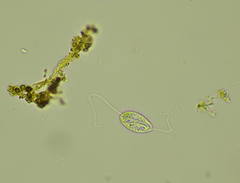
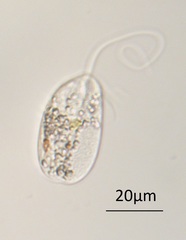
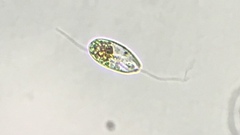
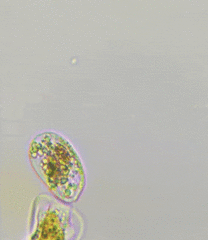
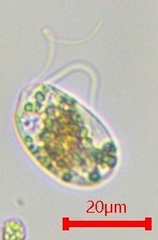
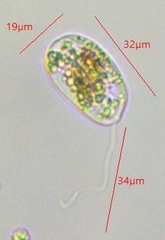
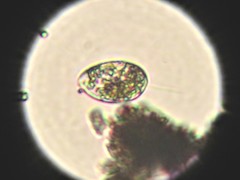
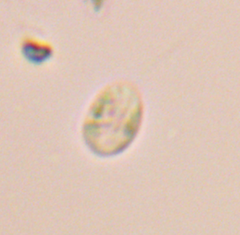
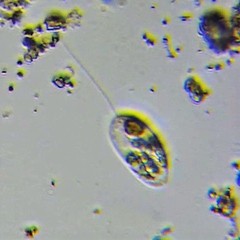
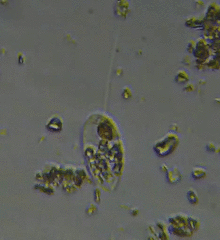
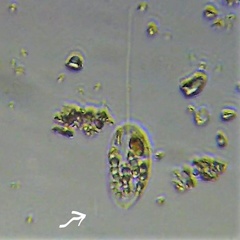
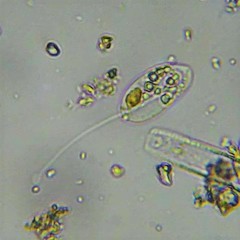
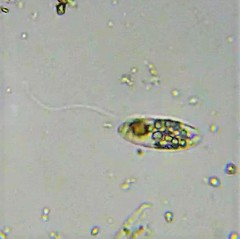
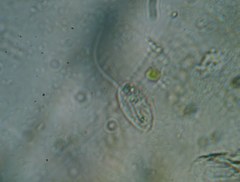
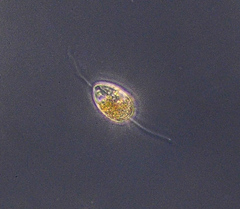
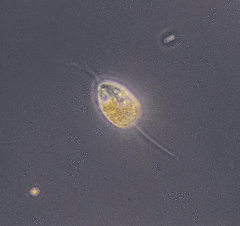
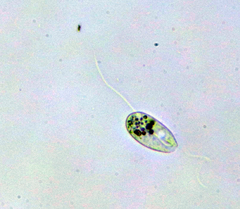
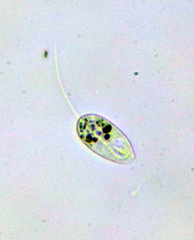
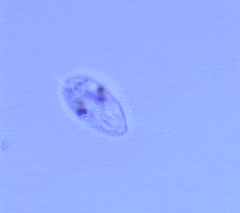
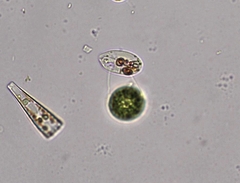
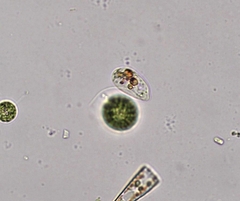
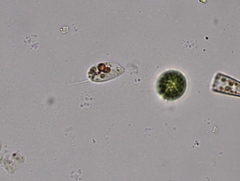
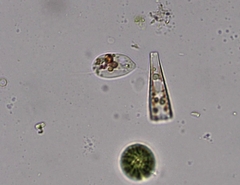
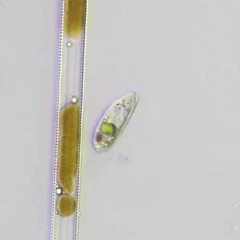
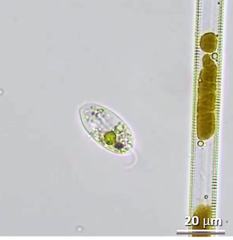
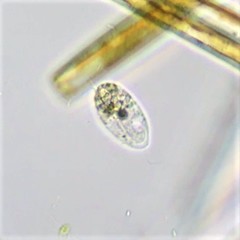
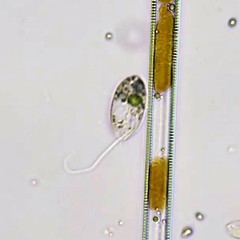
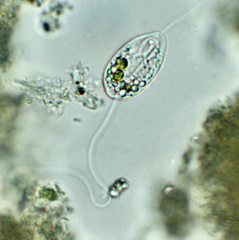
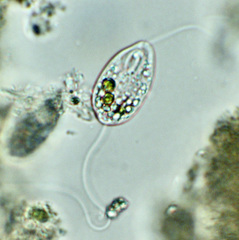
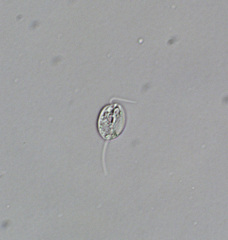
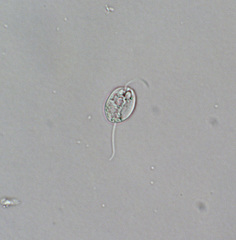
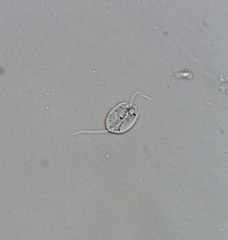
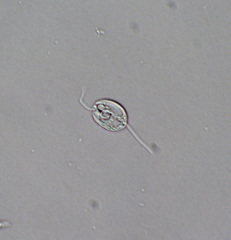
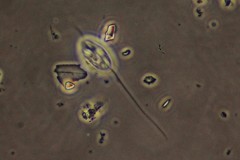
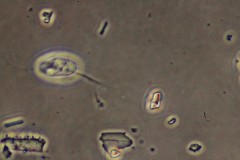
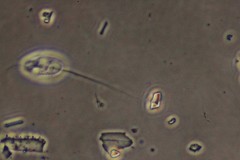
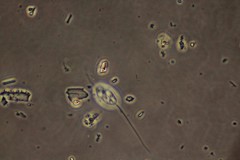
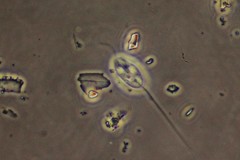
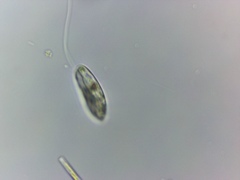
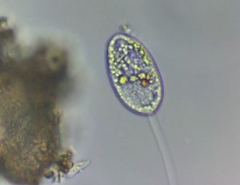
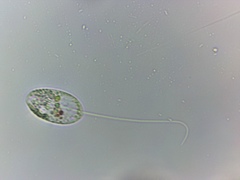
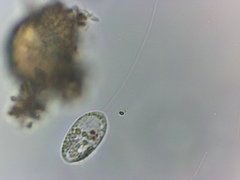
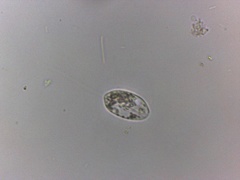
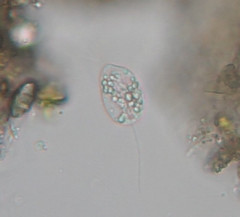
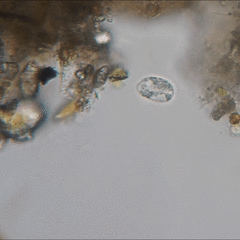
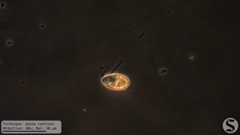
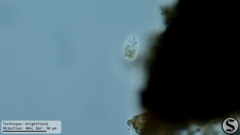
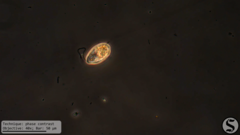
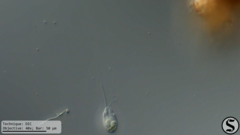
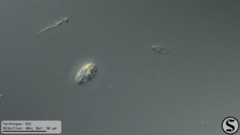
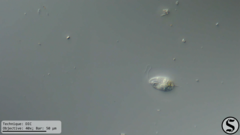
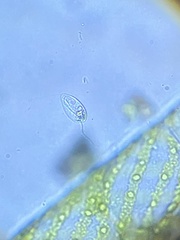
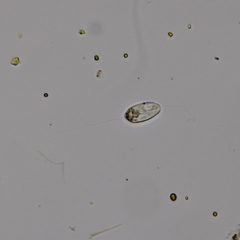
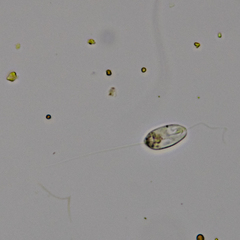
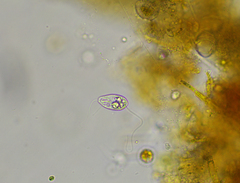
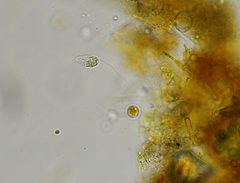
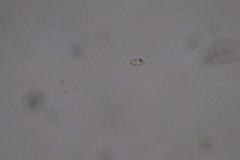
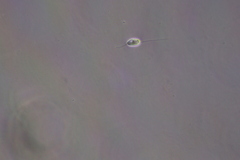
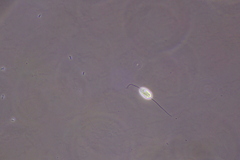
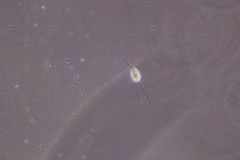
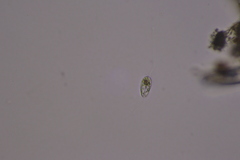
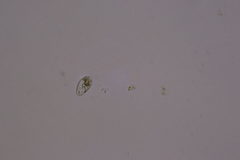
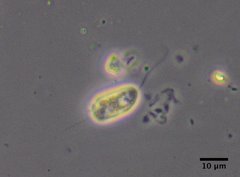
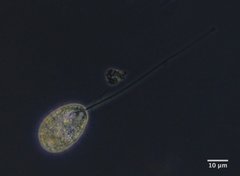
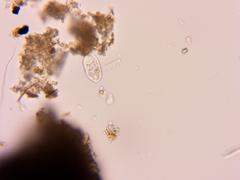
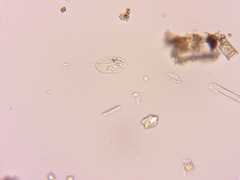
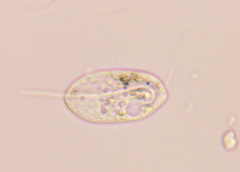
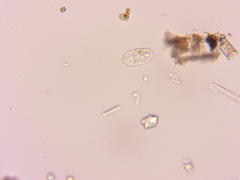
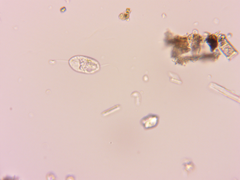
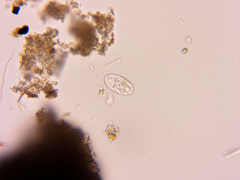
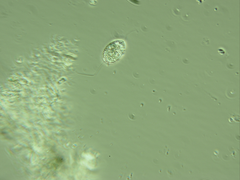
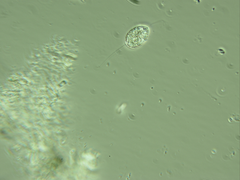
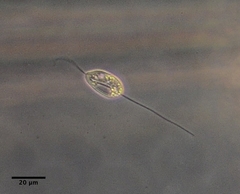
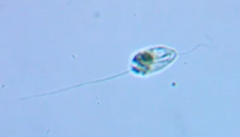
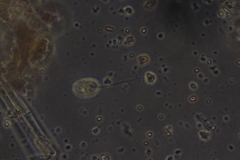
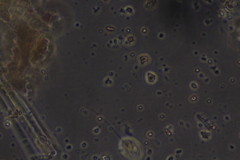
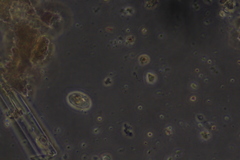
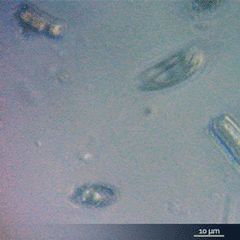
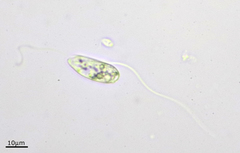
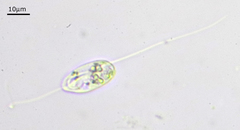
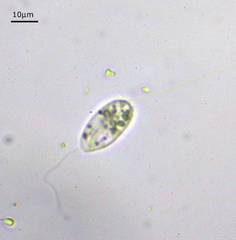
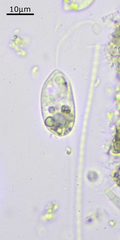
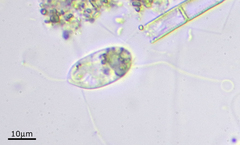
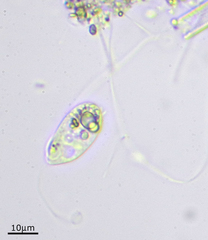
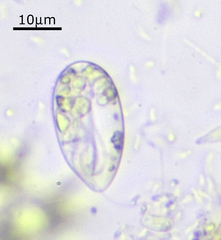
Anisonema (from Greek aniso- 'unequal' and -nema 'thread', meaning "unequal flagella") is a genus of colorless phagotrophic euglenid flagellates that occur in marine, brackish, and freshwater habitats around the world. Cells of Anisonema have two unequally sized flagella: a thinner anterior flagellum which flails around in front of the cell, and a thicker and longer posterior flagellum that trails behind, both emerging from the anterior region of a ventral groove in the cell. The cells glide on their posterior flagellum and can quickly reverse the direction of their movement. Like other euglenids, it has a relatively rigid protein pellicle capable of some deformation.
The genus was established by French biologist Félix Dujardin in 1841. Its type species, Anisonema acinus, is the only for which genetic data are available. Phylogenetic analyses reveal a close relationship with the genus Dinema in the family Anisonemidae, which in turn is part of the clade Anisonemia together with Neometanema and osmotrophic euglenids (Aphagea). An additional 20 species have been described throughout its history, only known from morphological observations. Their assignment to Anisonema has been problematic due to different interpretations of the diagnostic characters of the genus, such as the presence of a visible ingestion organelle. Some species previously assigned to Anisonema have been sequenced and transferred to oher genera, particularly Entosiphon, Hemiolia and Liburna.
...Images from inaturalist.org observations:
We recommend you sign up for this excellent, free service.