Armillaria luteobubalina: taxon details and analytics
- Domain
- Kingdom
- Fungi
- Phylum
- Basidiomycota
- Class
- Agaricomycetes
- Order
- Agaricales
- Family
- Physalacriaceae
- Genus
- Armillaria
- Species
- Armillaria luteobubalina
- Scientific Name
- Armillaria luteobubalina
Summary description from Wikipedia:
Armillaria luteobubalina
Armillaria luteobubalina, commonly known as the Australian honey fungus, is a species of root rot fungus in the family Physalacriaceae.
It was first described in 1978, after having been discovered several years earlier growing in a Eucalyptus plantation in southeastern Australia. It distinguished itself from other known Australian Armillaria species by its aggressive pathogenicity. It may take years for infected trees to show signs of disease, leading to an underestimation of disease prevalence. Studies show that the spread of disease in eucalypt forests is associated with infected stumps left following logging operations. Although several methods have been suggested to control the spread of disease, they are largely economically or environmentally unfeasible. Phylogenetic analyses have determined that A. luteobubalina is closely related to A. montagnei and that both of these species are in turn closely related to the Brazilian species A. paulensis. The distribution of A. luteobubalina suggests that it is an ancient species that originated before the separation of the precursor supercontinent Gondwana.
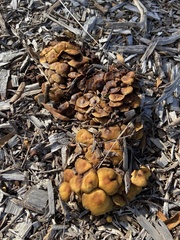
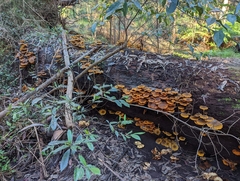
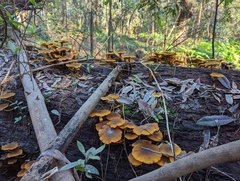
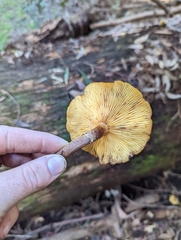
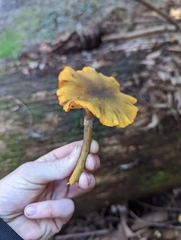
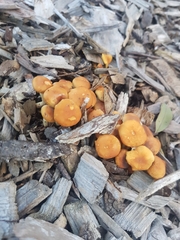
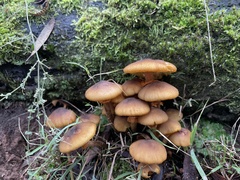
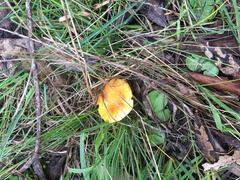
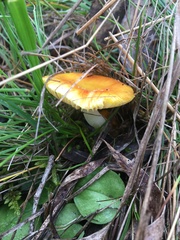
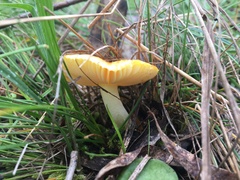
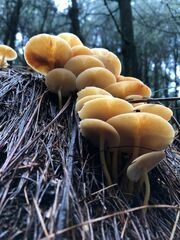
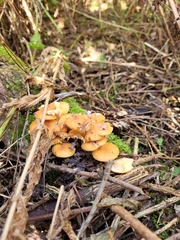
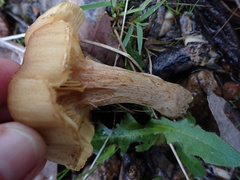
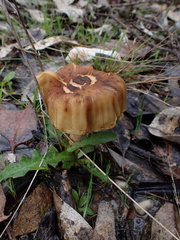
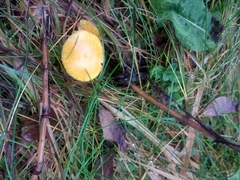
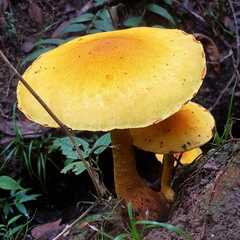
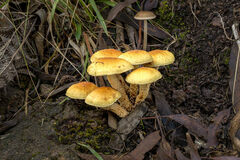
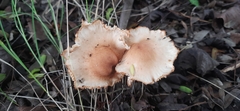
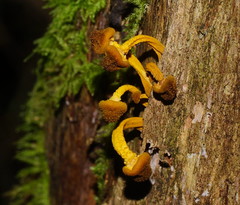
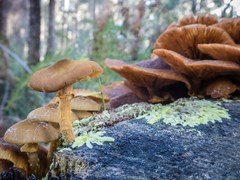
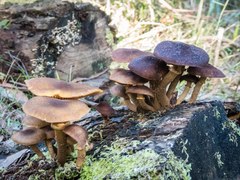
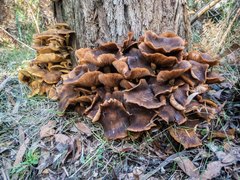
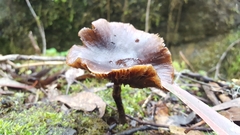
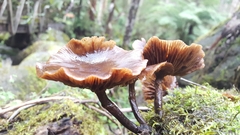
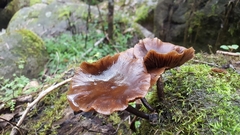
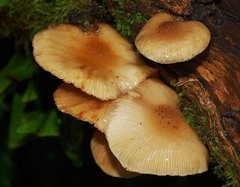
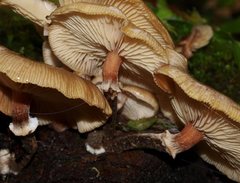
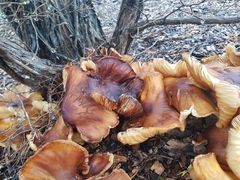
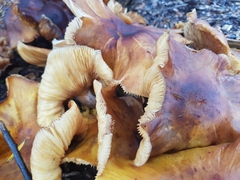
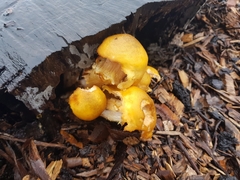
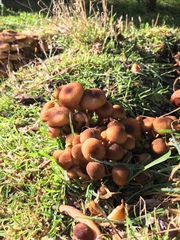
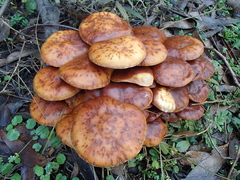
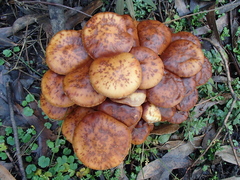
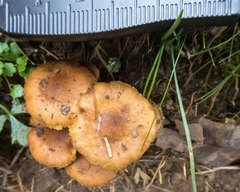
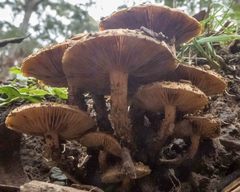
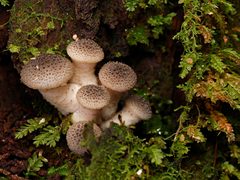
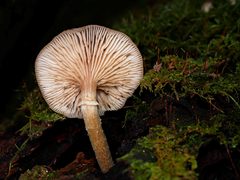
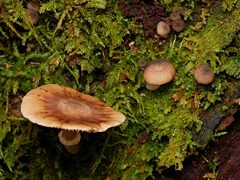
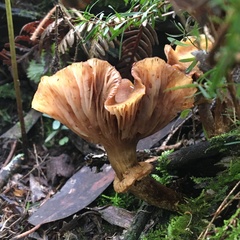
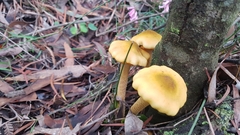
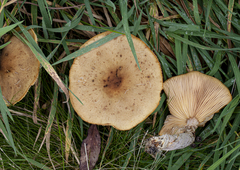
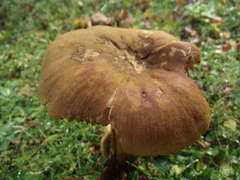
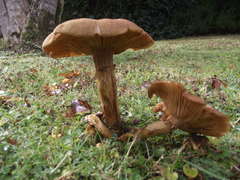
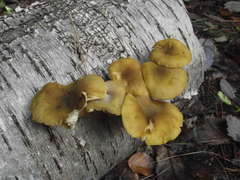
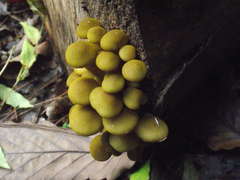
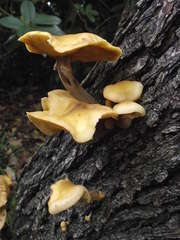
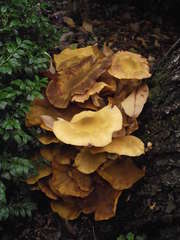
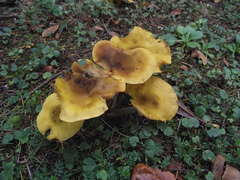
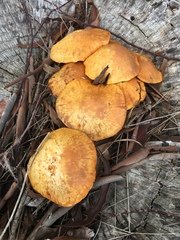
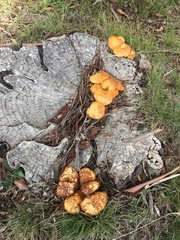
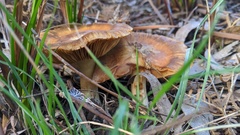
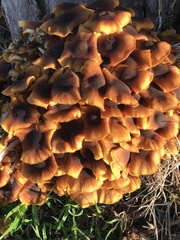
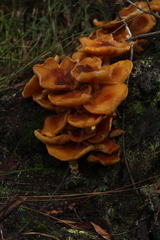
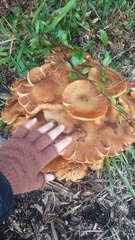
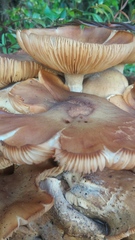
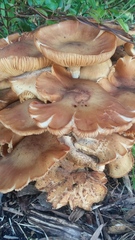
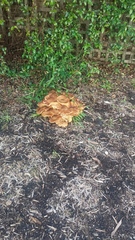
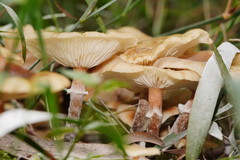
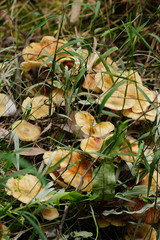
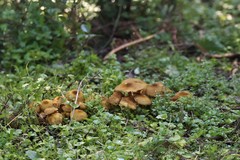
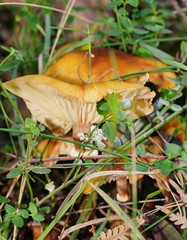
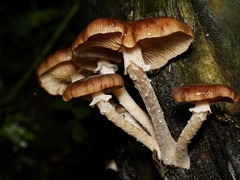
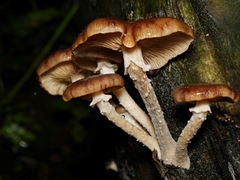
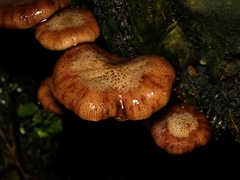
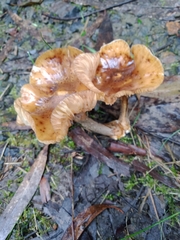
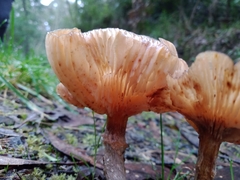
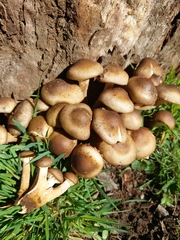
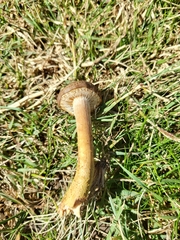
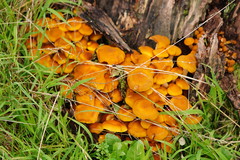
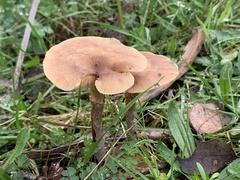
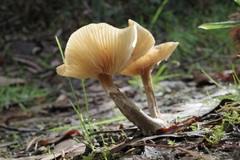
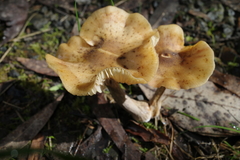
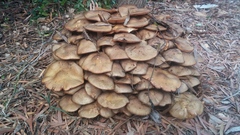
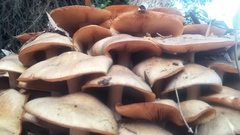
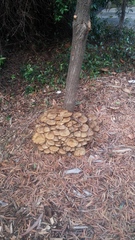
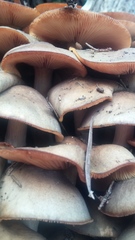
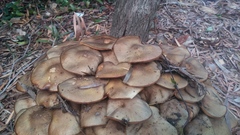
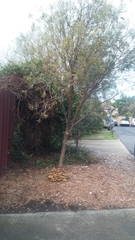
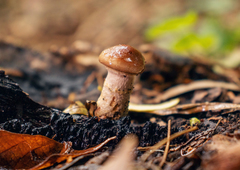
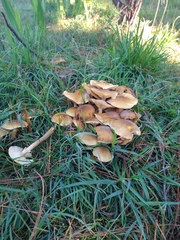
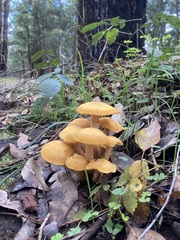
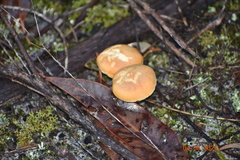
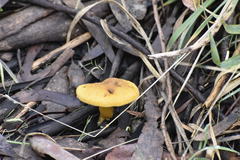
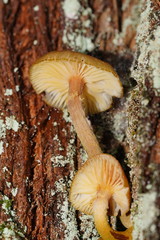
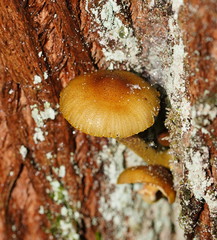
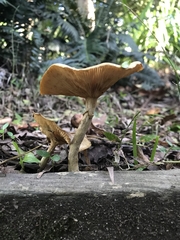
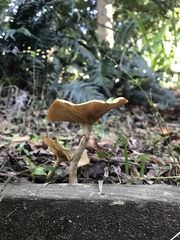
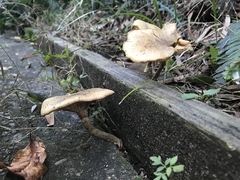
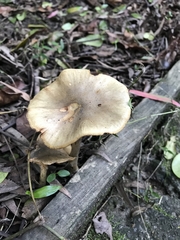
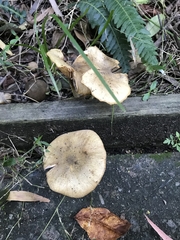
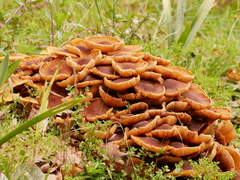
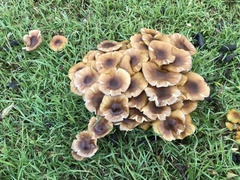
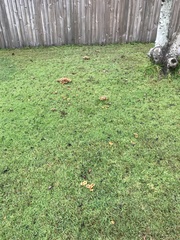
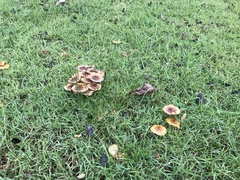
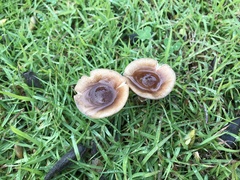
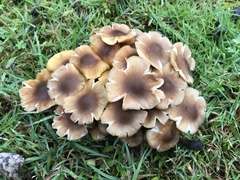
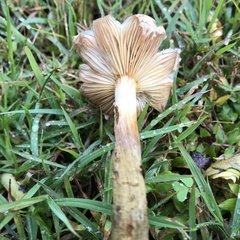
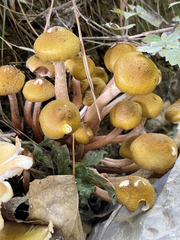
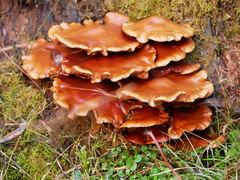
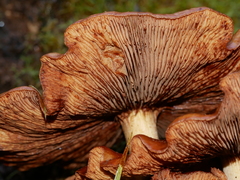
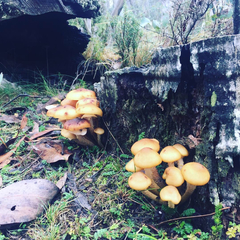
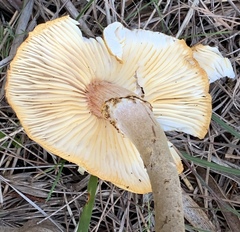
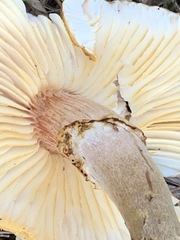
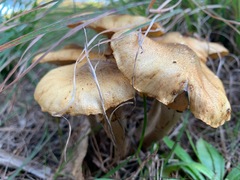
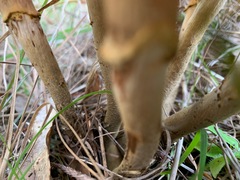
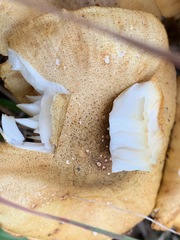
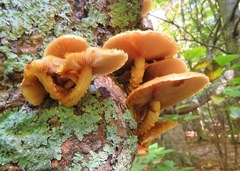
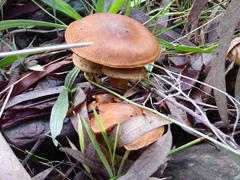
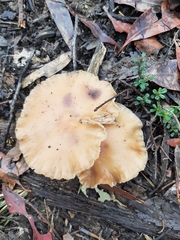
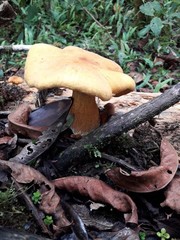
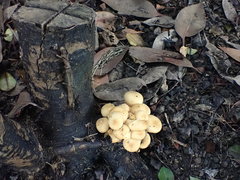
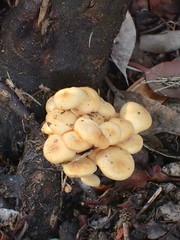
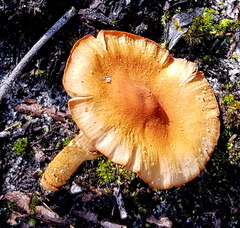
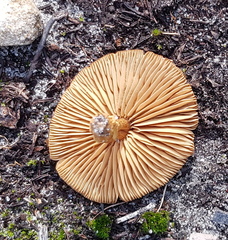
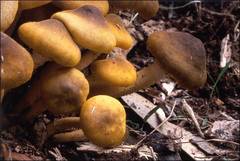
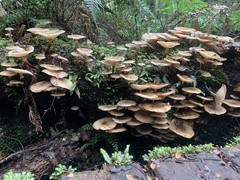
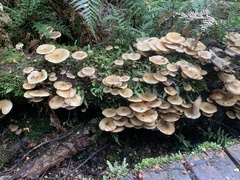
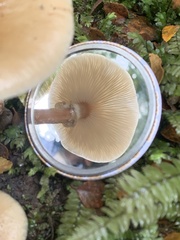
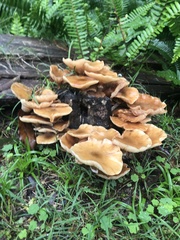
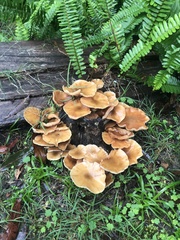
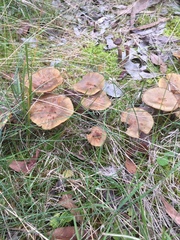
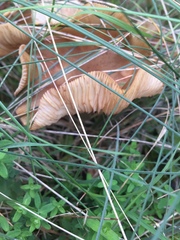
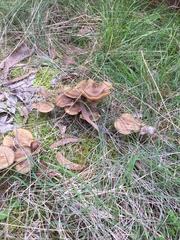
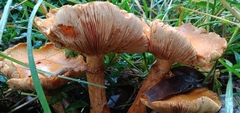
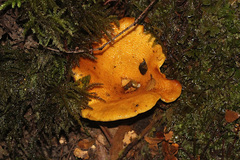
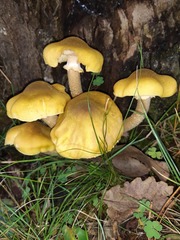
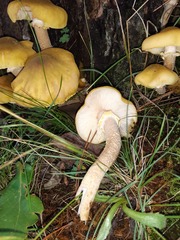
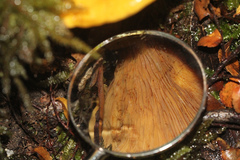
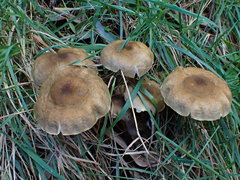
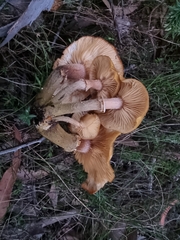
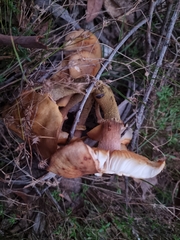
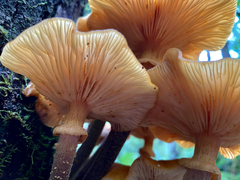
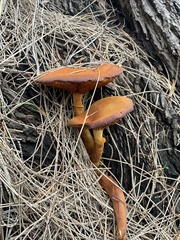
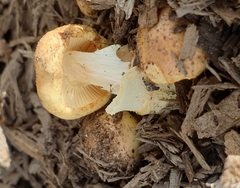
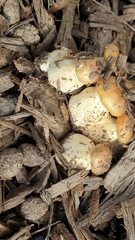
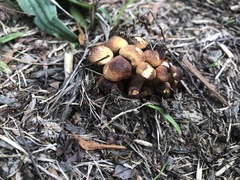
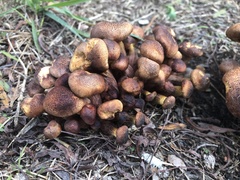
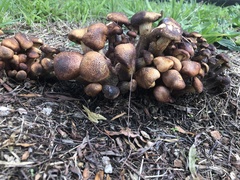
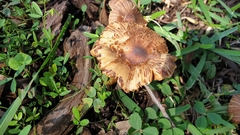
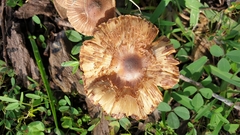
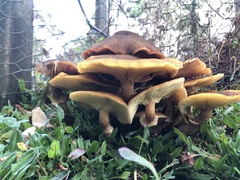
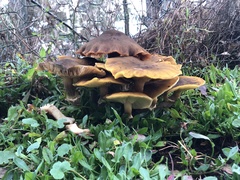
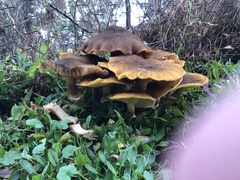
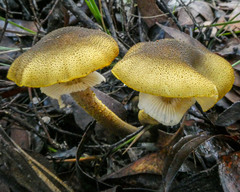
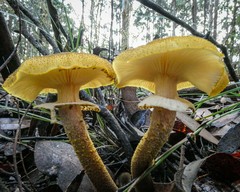
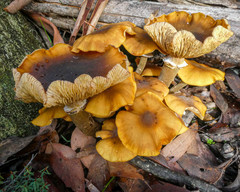
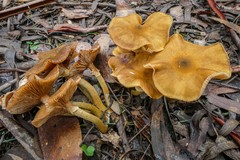
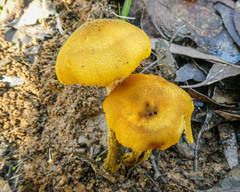
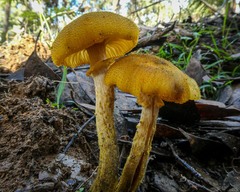
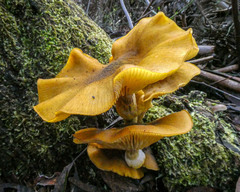
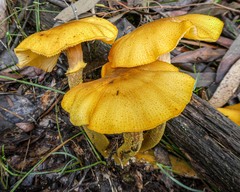
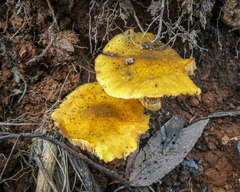
The fruit bodies have cream- to tan-coloured caps that grow up to 10 cm (4 in) in diameter and stems that measure up to 20 cm (8 in) long by 1.5 cm (1 in) thick. Widely distributed in southern Australia, the fungus is responsible for a disease known as Armillaria root rot, a primary cause of Eucalyptus tree death and forest dieback. It is the most pathogenic and widespread of the six Armillaria species found in Australia. The fungus has also been collected in Argentina and Chile. It appears at the base of infected trees and other woody plants in autumn (March–April). The fungus is dispersed through spores produced on gills on the underside of the caps, and also by growing vegetatively through the root systems of host trees. The ability of the fungus to spread vegetatively is facilitated by an aerating system that allows it to efficiently diffuse oxygen through rhizomorphs—rootlike structures made of dense masses of hyphae. The fruit bodies are edible, but require cooking to remove the bitter taste.
...Armillaria luteobubalina in languages:
- Chinese
- 澳洲蜜環菌
- English
- Australian honey fungus
Images from inaturalist.org observations:
We recommend you sign up for this excellent, free service.


Parent Taxon
Sibling Taxa
- Armillaria aotearoa
- Armillaria appendiculata
- Armillaria borealis
- Armillaria calvescens
- Armillaria cepistipes
- Armillaria fumosa
- Armillaria fuscipes
- Armillaria gallica
- Armillaria gemina
- Armillaria heimii
- Armillaria hinnulea
- Armillaria limonea
- Armillaria luteobubalina
- Armillaria mellea
- Armillaria mexicana
- Armillaria nabsnona
- Armillaria nardosmia
- Armillaria novae-zelandiae
- Armillaria obscura
- Armillaria ostoyae
- Armillaria pallidula
- Armillaria paulensis
- Armillaria puiggarii
- Armillaria rhagadiosa
- Armillaria sinapina
- Armillaria socialis
- Armillaria tigrensis
- Armillaria umbrinobrunnea
- Armillariella polymyces
- Rhizomorpha divergens