Canis latrans incolatus: taxon details and analytics
- Domain
- Kingdom
- Animalia
- Phylum
- Chordata
- Class
- Mammalia
- Order
- Carnivora
- Family
- Canidae
- Genus
- Canis
- Species
- Scientific Name
- Canis latrans incolatus
Summary description from Wikipedia:
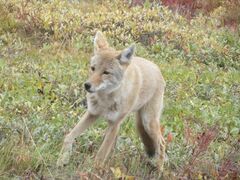
Northern coyote
The coyote (Canis latrans) is a species of canine also known as the American jackal, prairie wolf, and brush wolf. It is native to North America, and it is smaller than its close relative, the gray wolf, and slightly smaller than the closely related eastern wolf and red wolf. It fills much of the same ecological niche as the golden jackal does in Eurasia; however, the coyote is generally larger.
The coyote is listed as least concern by the International Union for Conservation of Nature, due to its wide distribution and abundance throughout North America. The species is versatile, able to adapt to and expand into environments modified by humans; urban coyotes are common in many cities. The coyote was sighted in eastern Panama (across the Panama Canal from their home range) for the first time in 2013.
The coyote has 19 recognized subspecies. The average male weighs 8 to 20 kg (18 to 44 lb) and the average female 7 to 18 kg (15 to 40 lb). Their fur color is predominantly light gray and red or fulvous interspersed with black and white, though it varies somewhat with geography. It is highly flexible in social organization, living either in a family unit or in loosely knit packs of unrelated individuals. Primarily carnivorous, its diet consists mainly of deer, rabbits, hares, rodents, birds, reptiles, amphibians, fish, and invertebrates, though it may also eat fruits and vegetables on occasion. Its characteristic vocalization is a howl that changes rapidly in tone and pitch.
Humans are the coyote's greatest threat, followed by cougars and gray wolves. While coyotes have never been known to mate with gray wolves in the wild, they do interbreed with eastern wolves and red wolves, producing "coywolf" hybrids. In the northeastern regions of North America, the eastern coyote (a larger subspecies, though still smaller than wolves) is the result of various historical and recent matings with various types of wolves. Eastern wolves also still mate with gray wolves, providing an avenue for further genetic exchange across canid species. Genetic studies show that most North American wolves contain some level of coyote DNA.
The coyote is a prominent character in Native American folklore, mainly in Aridoamerica, usually depicted as a trickster that alternately assumes the form of an actual coyote or a man. As with other trickster figures, the coyote uses deception and humor to rebel against social conventions. The animal was especially respected in Mesoamerican cosmology as a symbol of military might. After the European colonization of the Americas, it was seen in Anglo-American culture as a cowardly and untrustworthy animal. Unlike wolves, which have seen their public image improve, attitudes towards the coyote remain largely negative.
...Canis latrans incolatus in languages:
- Arabic
- قيوط شمالي
- Arabic
- قيوط يوكون
- English
- Northern Coyote
- English
- Alaskan Coyote
- English
- Yukon Coyote
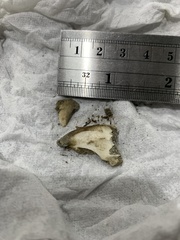
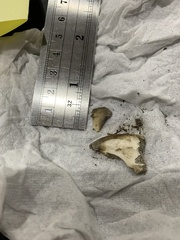
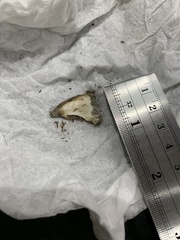
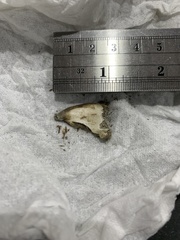
Images from inaturalist.org observations:
We recommend you sign up for this excellent, free service.
Parent Taxon
Sibling Taxa
- Canis latrans cagottis
- Canis latrans clepticus
- Canis latrans dickeyi
- Canis latrans frustror
- Canis latrans goldmani
- Canis latrans hondurensis
- Canis latrans impavidus
- Canis latrans incolatus
- Canis latrans jamesi
- Canis latrans latrans
- Canis latrans lestes
- Canis latrans mearnsi
- Canis latrans microdon
- Canis latrans ochropus
- Canis latrans peninsulae
- Canis latrans texensis
- Canis latrans thamnos
- Canis latrans vigilis