Chlamyphorus truncatus: taxon details and analytics
- Domain
- Kingdom
- Animalia
- Phylum
- Chordata
- Class
- Mammalia
- Order
- Cingulata
- Family
- Chlamyphoridae
- Genus
- Chlamyphorus
- Species
- Chlamyphorus truncatus
- Scientific Name
- Chlamyphorus truncatus
Summary description from Wikipedia:
Pink fairy armadillo
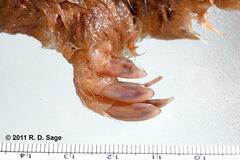
The pink fairy armadillo (Chlamyphorus truncatus) is the smallest species of armadillo, first described by Richard Harlan in 1825. The pink fairy armadillo is 90–115 mm (3.5–4.5 in) long, and typically weighs about 120 g (4.2 oz). This solitary, desert-adapted animal is endemic to the deserts and scrub lands of central Argentina. The pink fairy armadillo is closely related to the only other fairy armadillo, the greater fairy armadillo.
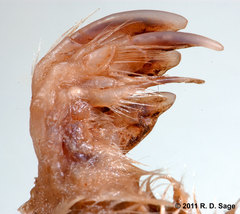
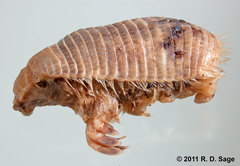
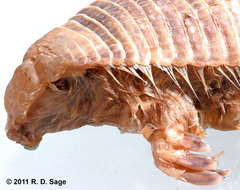
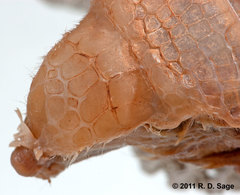
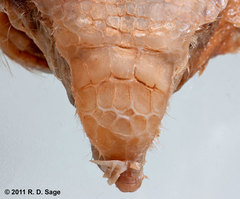
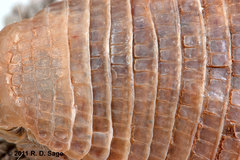
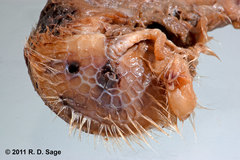
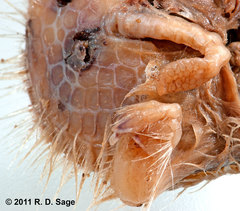
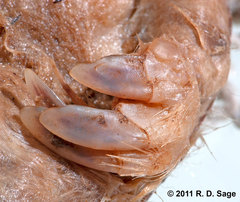
Pink fairy armadillos have small eyes, silky yellowish white fur, and flexible dorsal shells that are attached to their bodies solely by thin dorsal membranes. Their spatula-shaped tails protrude from vertical plates at the blunt rear of their shells. They exhibit nocturnal and solitary habits and feed themselves largely on insects, worms, snails, and various plant parts. The pink fairy armadillo has a unique ability to bury itself in a matter of seconds, using its specialized claws to dig into sandy or loamy soils. This behavior helps protect the armadillo from predators and extreme temperatures, as well as conserve moisture in its arid habitat.
The conservation status of pink fairy armadillos is uncertain, and it is listed as Data Deficient by the IUCN Red List of Threatened Species. The decline in population for this species has generally been attributed to farming activities and predators including domestic dogs and cats. Pink fairy armadillos are found less commonly than they were a few decades ago, and the field sightings have been rare and incidental.
Individuals caught in the wild had a tendency to die during or a couple days after transport from their natural habitat to captive facilities. There is a sole record for the longevity of a pink fairy armadillo that was held in captivity more than four years; however, that particular case lacks scientific description. Armadillos' evolutionary distinctiveness, combined with their restricted geographic range, ongoing threats, and rarity, make conservation extremely urgent for these species.
...Chlamyphorus truncatus in languages:
- Arabic
- مدرع أقطع
- Arabic
- مدرع المتدثر الأقطع
- Arabic
- مدرع القزم الأرجنتيني
- Arabic
- مدرع الجنية الصغير
- Arabic
- مدرع الجنية الوردي
- Bokmål
- Liten Beltemus
- Czech
- pláštník malý
- Dutch
- Gordelmol
- English
- Lesser Fairy Armadillo
- English
- Lesser Pichi Ciego
- English
- Pink Fairy Armadillo
- Finnish
- pikkukaivajavyötiäinen
- German
- Gürtelmull
- German
- Kleiner Gürtelmull
Images from inaturalist.org observations:
We recommend you sign up for this excellent, free service.