Coprosma acutifolia: taxon details and analytics
- Domain
- Kingdom
- Plantae
- Phylum
- Tracheophyta
- Class
- Magnoliopsida
- Order
- Gentianales
- Family
- Rubiaceae
- Genus
- Coprosma
- Species
- Coprosma acutifolia
- Scientific Name
- Coprosma acutifolia
Summary description from Wikipedia:
Coprosma acutifolia
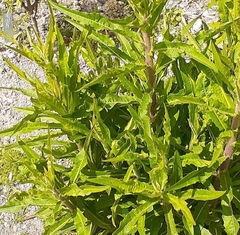
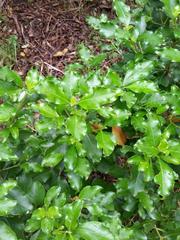
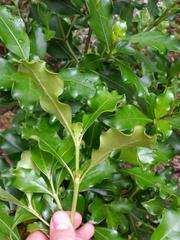
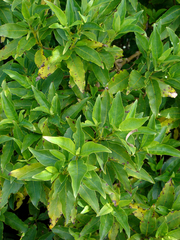
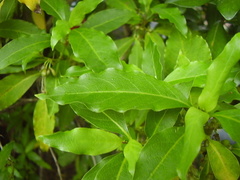
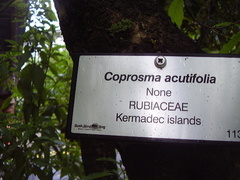
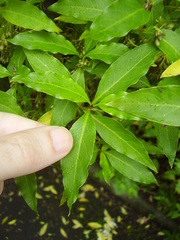
Coprosma acutifolia, is a shrub that is native to New Zealand, found only on Raoul Island. C. acutifolia can grow up to 12 metres tall in wet or dry forest, becoming a sub-canopy tree at lower altitudes and a canopy species along ridgelines.
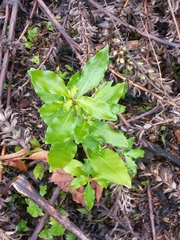
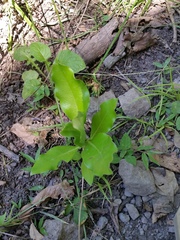
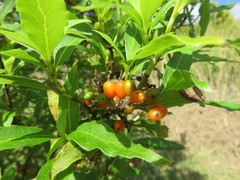
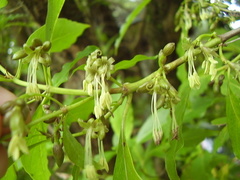
Tree up to c. 10 m. tall; branches ascending; branchlets slender, glab. Lvs on slender petioles 5–7 mm. long. Stipules membr., sheathing, sub-acute; denticle prominent. Lamina membr., glab., ovate to ovate-elliptic to lanceolate, acuminate, tapering to petiole; ± 60-(75) × 20- (35) mm.; margins ± waved. Reticulated veins fine, evident. ♂ 3–9 on slender axillary branched peduncles 10–15 mm. long; calyx cupular, teeth 4–5, acute; corolla subfunnelform, lobes 5, acute, ± = tube; stamens us. 5. ♀ 3 in a cluster on branched axillary peduncles; calyx cupular, teeth triangular, us. 5; corolla tubular, lobes linear-triangular, < tube. Drupe orange-red, oblong, 7–8 mm. long.
...Images from inaturalist.org observations:
We recommend you sign up for this excellent, free service.
Parent Taxon
Sibling Taxa
- Coprosma acerosa
- Coprosma acutifolia
- Coprosma acutifolia × Coprosma macrocarpa macrocarpa
- Coprosma acutifolia × Coprosma macrocarpa minor
- Coprosma arborea
- Coprosma archboldiana
- Coprosma areolata
- Coprosma atropurpurea
- Coprosma australis
- Coprosma autumnalis
- Coprosma banksii
- Coprosma barbata
- Coprosma baueri
- Coprosma benefica
- Coprosma bougainvilleensis
- Coprosma brassii
- Coprosma brunnea
- Coprosma chathamica
- Coprosma cheesemanii
- Coprosma ciliata
- Coprosma colensoi
- Coprosma cookei
- Coprosma cordicarpa
- Coprosma crassifolia
- Coprosma crenulata
- Coprosma cuneata
- Coprosma cymosa
- Coprosma decurva
- Coprosma depressa
- Coprosma distantia
- Coprosma divergens
- Coprosma dodonaeifolia
- Coprosma dumosa
- Coprosma elatirioides
- Coprosma elegans
- Coprosma elliptica
- Coprosma ernodeoides
- Coprosma esulcata
- Coprosma fatuhivaensis
- Coprosma foetidissima
- Coprosma foliosa
- Coprosma fowerakeri
- Coprosma glabrata
- Coprosma hirtella
- Coprosma hookeri
- Coprosma huttoniana
- Coprosma inopinata
- Coprosma intertexta
- Coprosma kauensis
- Coprosma kawaikiniensis
- Coprosma laevigata
- Coprosma lanceolaris
- Coprosma linariifolia
- Coprosma longifolia
- Coprosma lucida
- Coprosma macrocarpa
- Coprosma menziesii
- Coprosma meyeri
- Coprosma microcarpa
- Coprosma montana
- Coprosma moorei
- Coprosma neglecta
- Coprosma nephelephila
- Coprosma niphophila
- Coprosma nitida
- Coprosma nivalis
- Coprosma novaehebridae
- Coprosma obconica
- Coprosma ochracea
- Coprosma ochracea × rhynchocarpa
- Coprosma oliveri
- Coprosma papuensis
- Coprosma parviflora
- Coprosma pedicellata
- Coprosma perpusilla
- Coprosma persicifolia
- Coprosma petiolata
- Coprosma petriei
- Coprosma pilosa
- Coprosma polymorpha
- Coprosma prisca
- Coprosma propinqua
- Coprosma pseudociliata
- Coprosma pseudocuneata
- Coprosma pubens
- Coprosma pumila
- Coprosma putida
- Coprosma pyrifolia
- Coprosma quadrifida
- Coprosma raiateensis
- Coprosma rapensis
- Coprosma repens
- Coprosma repens x robusta
- Coprosma reticulata
- Coprosma rhamnoides
- Coprosma rhynchocarpa
- Coprosma rigida
- Coprosma robusta
- Coprosma rotundifolia
- Coprosma rubra
- Coprosma rugosa
- Coprosma savaiiensis
- Coprosma serrulata
- Coprosma setosa
- Coprosma spathulata
- Coprosma strigulosa
- Coprosma sundana
- Coprosma tahitensis
- Coprosma talbrockiei
- Coprosma temetiuensis
- Coprosma tenuicaulis
- Coprosma tenuifolia
- Coprosma ternata
- Coprosma velutina
- Coprosma virescens
- Coprosma waima
- Coprosma waimeae
- Coprosma wallii
- Coprosma wollastonii
- Coprosma × arcuata
- Coprosma × buchananii
- Coprosma × gracilicaulis
- Coprosma × gracilis
- Coprosma × molokaiensis
- Coprosma × tadgellii
- Coprosma ×cunninghamii
- Coprosma ×kirkii