Coryphantha ramillosa: taxon details and analytics
- Domain
- Kingdom
- Plantae
- Phylum
- Tracheophyta
- Class
- Magnoliopsida
- Order
- Caryophyllales
- Family
- Cactaceae
- Genus
- Coryphantha
- Species
- Coryphantha ramillosa
- Scientific Name
- Coryphantha ramillosa
Summary description from Wikipedia:
Coryphantha ramillosa
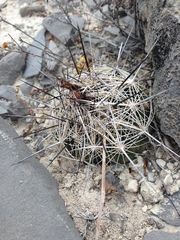
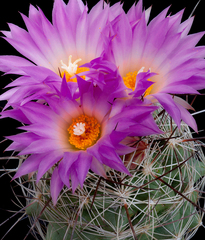
Coryphantha ramillosa is a rare species of cactus known by the common names bunched cory cactus and whiskerbush. It is native to the border region between Texas in the United States and Coahuila in Mexico. Because it was believed to be rare and threatened by a number of processes, it was federally listed as a threatened species of the United States in 1979.
The range and abundance of this plant are not well known, especially within Mexico, and it may not be as uncommon as was thought in 1979. The cactus occurs in at least seven locations in Texas, several being within the bounds of Big Bend National Park. One of the most recent estimates of abundance in Texas is 5,000 to 10,000 individuals in two counties. The range of appropriate habitat in Mexico covers 2.5 times the amount of land as in Texas. Many of the plants are located in remote areas, which helps protect them from people. A major threat to the species is harvesting by cactus enthusiasts and dealers.
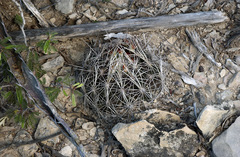
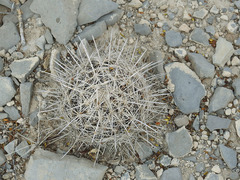
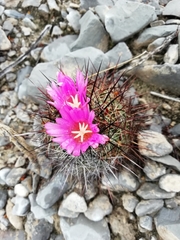
This cactus is generally spherical or cylindrical in shape, and unbranched. It grows up to about 9.5 centimeters long and is textured with protruding areoles up to 2 centimeters tall. The areoles bear curving spines, the central one thick, dark, and up to 4.3 centimeters in length. The smaller spines are light in color, often white. The showy flower occurs at the apex of the cactus body and measures up to 6.5 centimeters long. Its tepals are pink, lightening to pale pink or white near the center, and sometimes with darker mid-stripes. The rounded fruit is pale to dark green, fleshy and juicy and 1 or 2 centimeters long. The plant blooms in the summer, with an extended blooming period when rainfall is higher.
The cactus occurs in desert scrub habitat, generally in dry, rocky, barely accessible areas where few other plants grow. The substrate is limestone.
The plant is being propagated and studied at Desert Botanical Garden in Phoenix, Arizona.
...Coryphantha ramillosa in languages:
- English
- Bunched Cory Cactus
Images from inaturalist.org observations:
We recommend you sign up for this excellent, free service.

Parent Taxon
Sibling Taxa
- Coryphantha clavata
- Coryphantha compacta
- Coryphantha cornifera
- Coryphantha delaetiana
- Coryphantha delicata
- Coryphantha difficilis
- Coryphantha durangensis
- Coryphantha echinoidea
- Coryphantha echinus
- Coryphantha elephantidens
- Coryphantha erecta
- Coryphantha georgii
- Coryphantha glanduligera
- Coryphantha glassii
- Coryphantha gracilis
- Coryphantha hintoniorum
- Coryphantha ibarrana
- Coryphantha jalpanensis
- Coryphantha kracikii
- Coryphantha longicornis
- Coryphantha macromeris
- Coryphantha maiz-tablasensis
- Coryphantha neglecta
- Coryphantha nickelsiae
- Coryphantha octacantha
- Coryphantha ottonis
- Coryphantha pallida
- Coryphantha palmeri
- Coryphantha poselgeriana
- Coryphantha potosiana
- Coryphantha pseudoechinus
- Coryphantha pseudonickelsiae
- Coryphantha pseudoradians
- Coryphantha pulleineana
- Coryphantha pycnacantha
- Coryphantha radians
- Coryphantha ramillosa
- Coryphantha recurvata
- Coryphantha reduncispina
- Coryphantha retusa
- Coryphantha robustispina
- Coryphantha salinensis
- Coryphantha sulcata
- Coryphantha sulcolanata
- Coryphantha tripugionacantha
- Coryphantha vaupeliana
- Coryphantha vogtherriana
- Coryphantha werdermannii
- Coryphantha wohlschlageri