Echinococcus granulosus: taxon details and analytics
- Domain
- Kingdom
- Animalia
- Phylum
- Platyhelminthes
- Class
- Cestoda
- Order
- Cyclophyllidea
- Family
- Taeniidae
- Genus
- Echinococcus
- Species
- Echinococcus granulosus
- Scientific Name
- Echinococcus granulosus
Summary description from Wikipedia:
Echinococcus granulosus
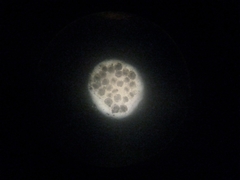
Echinococcus granulosus, also called the hydatid worm or dog tapeworm, is a cyclophyllid cestode that dwells in the small intestine of canids as an adult, but which has important intermediate hosts such as livestock and humans, where it causes cystic echinococcosis, also known as hydatid disease. The adult tapeworm ranges in length from 3 mm to 6 mm and has three proglottids ("segments") when intact—an immature proglottid, mature proglottid and a gravid proglottid. The average number of eggs per gravid proglottid is 823. Like all cyclophyllideans, E. granulosus has four suckers on its scolex ("head"), and E. granulosus also has a rostellum with hooks. Several strains of E. granulosus have been identified, and all but two are noted to be infective in humans.
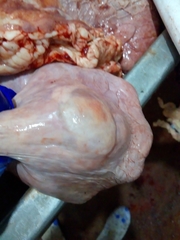
The lifecycle of E. granulosus involves dogs and wild carnivores as a definitive host for the adult tapeworm. Definitive hosts are where parasites reach maturity and reproduce. Wild or domesticated ungulates, such as sheep, serve as an intermediate host. Transitions between life stages occur in intermediate hosts. The larval stage results in the formation of echinococcal cysts in intermediate hosts. Echinococcal cysts are slow growing, but can cause clinical symptoms in humans and be life-threatening. Cysts may not initially cause symptoms, in some cases for many years. Symptoms developed depend on location of the cyst, but most occur in the liver, lungs, or both.
Echinococcus granulosus was first documented in Alaska but is distributed worldwide. It is especially prevalent in parts of Eurasia, north and east Africa, Australia, and South America. Communities that practice sheep farming experience the highest risk to humans, but wild animals can also serve as an avenue for transmission. For example, dingoes serve as a definitive host before larvae infect sheep in the mainland of Australia. Sled dogs may expose moose or reindeer to E. granulosus in parts of North America and Eurasia.
...Echinococcus granulosus in languages:
- Arabic
- مشوكة حبيبية
- Czech
- měchožil zhoubný
- English
- Hyper Tape-worm
- English
- Dog Tapeworm
- English
- Hydatid Worm
- English
- Small Tapeworm
- Polish
- Tasiemiec bąblowcowy
- Russian
- Эхинококк
Images from inaturalist.org observations:
We recommend you sign up for this excellent, free service.