Egernia: taxon details and analytics
- Domain
- Kingdom
- Animalia
- Phylum
- Chordata
- Class
- Reptilia
- Order
- Squamata
- Family
- Scincidae
- Genus
- Egernia
- Species
- Scientific Name
- Egernia
Summary description from Wikipedia:
Egernia
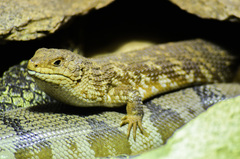
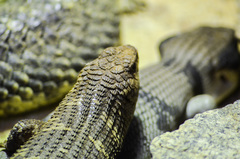
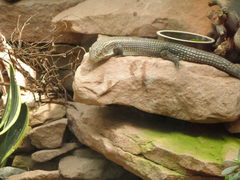
Egernia is a genus of skinks (family Scincidae) that occurs in Australia. These skinks are ecologically diverse omnivores that inhabit a wide range of habitats. However, in the loose delimitation (which incorporates about 30 species) the genus is not monophyletic but an evolutionary grade, as has long been suspected due to its lack of characteristic apomorphies.
Some of the skinks traditionally placed in Egernia appear to be among the most intelligent squamates. They have been shown to be able to distinguish between relatives and unrelated conspecifics, and can recognize relatives individually. Several species form monogamous pair-bonds. For instance, the black rock skink is a species who can perform kin discrimination based on scent and form monogamous pair-bonds and a nuclear family structure. Most of these species belong to Egernia sensu stricto, and similar behaviour is also known in the related Solomon Islands skink (Corucia zebrata). The latter means that the high intelligence and social skills are probably plesiomorphic for the Egernia genus-group as a whole, and that the solitary species appear to have evolved towards being less intelligent and social again. It may still be, however, that the intelligent behaviour is a homoplasy that evolved several times in the Egernia genus-group; the fact that Corucia is a monotypic and rather distinct genus makes it impossible to decide at present.
...Egernia in languages:
- Danish
- Pighaleskinker
- English
- Egernia Skinks
- English
- Egernias
- Japanese
- イワトカゲ属
- Russian
- Колючие сцинки
- Russian
- Колючехвостые сцинки
- Russian
- Эгернии
- Thai
- จิ้งเหลนเอเกอร์เนีย
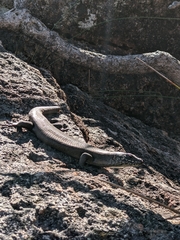
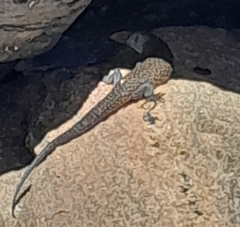
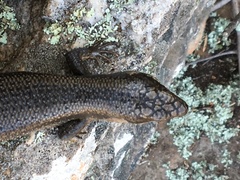
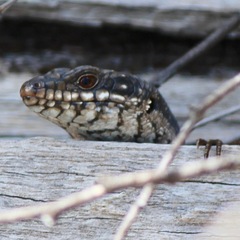
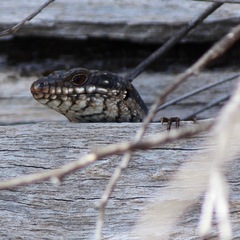
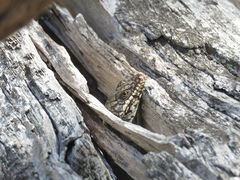
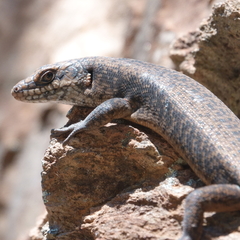
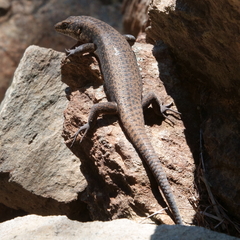
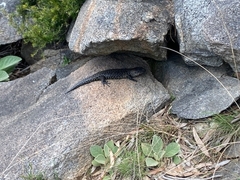
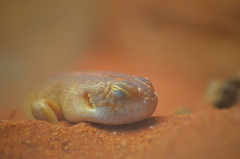
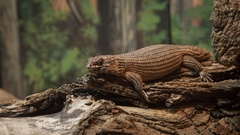
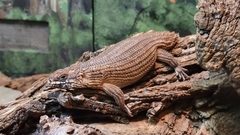
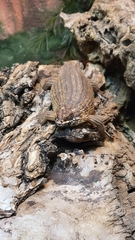
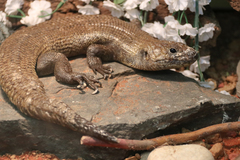
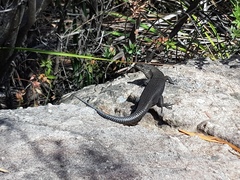
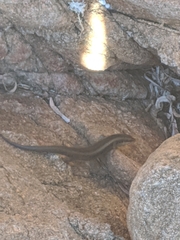
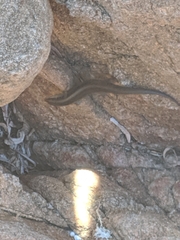
Images from inaturalist.org observations:
We recommend you sign up for this excellent, free service.