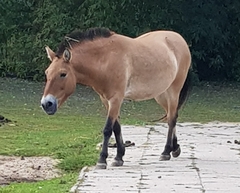
Equus ferus przewalskii: taxon details and analytics
- Domain
- Kingdom
- Animalia
- Phylum
- Chordata
- Class
- Mammalia
- Order
- Perissodactyla
- Family
- Equidae
- Genus
- Equus
- Species
- Scientific Name
- Equus ferus przewalskii
Summary description from Wikipedia:
Przewalski's horse
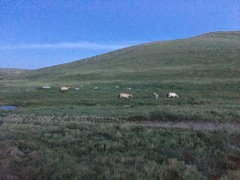
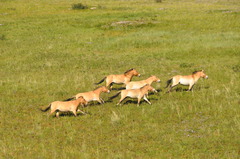
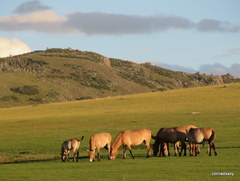
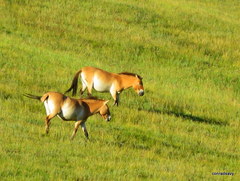
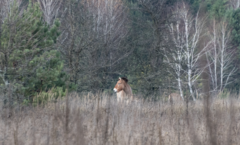
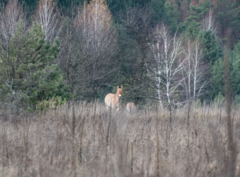
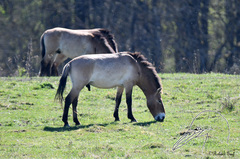
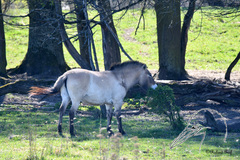
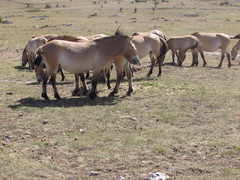
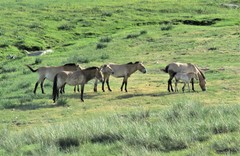
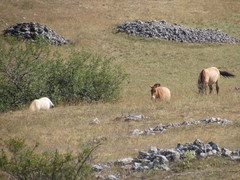
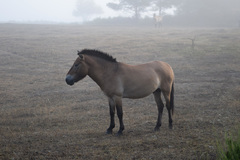
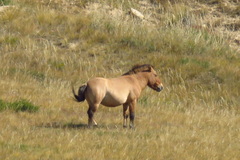
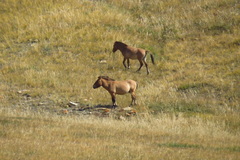
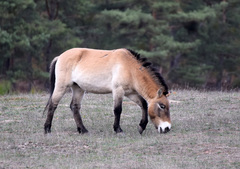
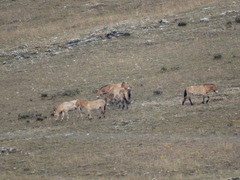
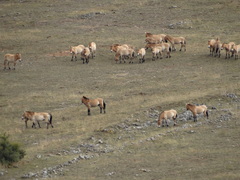
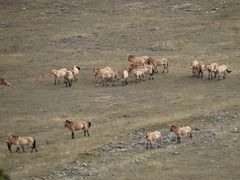
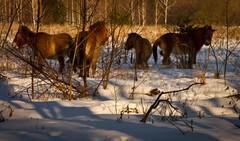
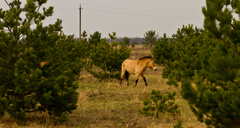
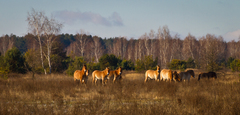
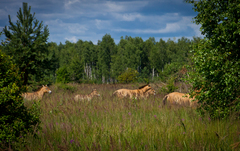
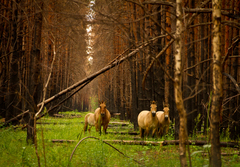
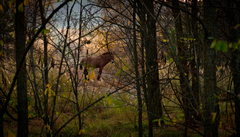
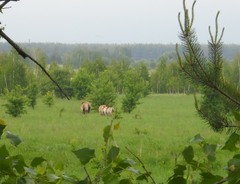
Przewalski's horse (Equus ferus przewalskii or Equus przewalskii), also called the takhi, Mongolian wild horse or Dzungarian horse, is a rare and endangered wild horse originally native to the steppes of Central Asia. It is named after the Russian geographer and explorer Nikolay Przhevalsky. Once extinct in the wild, since the 1990s it has been reintroduced to its native habitat in Mongolia in the Hustai National Park, Takhin Tal Nature Reserve, and Khomiin Tal, as well as several other locales in Central Asia and Eastern Europe.
Several genetic characteristics of Przewalski's horse differ from those seen in modern domestic horses, indicating neither is an ancestor of the other. For example, Przewalski's horse has 33 chromosome pairs, compared to 32 for the domestic horse. Their ancestral lineages split from a common ancestor between 160,000 and 38,000 years ago, long before the domestication of the horse. Przewalski's horse was long considered the only remaining truly wild horse, in contrast with the American mustang and the Australian brumby, which are instead feral horses descended from domesticated animals. That status was called into question when domestic horses of the 5,000-year-old Botai culture of Central Asia were found to be more closely related to Przewalski's horses than to E. f. caballus. The study raised the possibility that modern Przewalski's horses could be the feral descendants of the domestic Botai horses. However, it remains possible that both the Botai horses and the modern Przewalski's horses descend separately from the same ancient wild Przewalski's horse population. Its taxonomic position is still debated, with some taxonomists treating Przewalski's horse as a species, E. przewalskii, others as a subspecies of wild horse (E. ferus przewalskii) or a variety of the domesticated horse (E. ferus caballus).
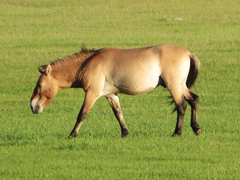
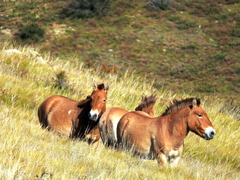
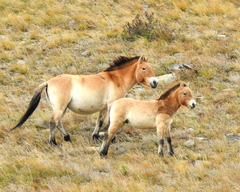
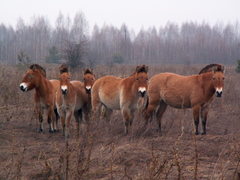
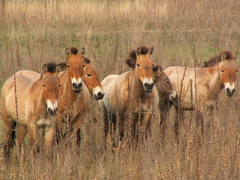
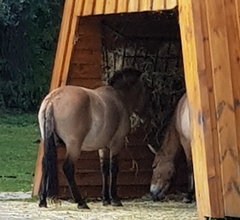
Przewalski's horse is stockily built, smaller, and shorter than its domesticated relatives. Typical height is about 12–14 hands (48–56 inches, 122–142 cm), and the average weight is around 300 kg (660 lb). They have a dun coat with pangaré features and often have dark primitive markings.
...Equus ferus przewalskii in languages:
- Afrikaans
- Przewalski-perd
- Arabic
- حصان برزوا السكية
- Arabic
- حصان بري اسيوي
- Bokmål
- Przewalskihest
- Chinese
- 普氏野马
- Chinese
- 蒙古野马
- Chinese
- 准噶尔野马
- Croatian
- Divlji konj Przewalskoga
- Czech
- kůň Převalského
- Dutch
- Przewalskipaard
- English
- Przewalski's Horse
- English
- Tahki
- English
- Dzungarian Horse
- English
- Mongolian Wild Horse
- English
- Asian Wild Horse
- English
- Dagy
- English
- Przewalski's Wild Horse
- English
- P-horse
- English
- Asiatic Wild Horse
- English
- Przevalski's Horse
- English
- Botai Horse
- English
- Przewalski Horse
- English
- Takh
- Estonian
- Prževalski hobune
- French
- Cheval de Przewalski
- German
- Przewalski-Pferd
- German
- Przewalskipferd
- Italian
- Cavallo di Przewalski
- Kazakh
- Керқұлан
- Lithuanian
- Prževalskio arklys
- Portuguese
- Cavalo-de-przewalskii
- Russian
- Лошадь Пржевальского
- Swedish
- Przewalskis häst
- Ukrainian
- Кінь Пржевальського
Images from inaturalist.org observations:
We recommend you sign up for this excellent, free service.