Eulophia andamanensis: taxon details and analytics
- Domain
- Kingdom
- Plantae
- Phylum
- Tracheophyta
- Class
- Liliopsida
- Order
- Asparagales
- Family
- Orchidaceae
- Genus
- Eulophia
- Species
- Eulophia andamanensis
- Scientific Name
- Eulophia andamanensis
Summary description from Wikipedia:
Eulophia andamanensis
Eulophia andamanensis is an orchid found to occur among the Andaman and Nicobar group of Islands (off the east coast of India and also in the north-western tip of Langkawi island in Malaysia.The occurrence of this ground orchid in Andaman Islands is restricted to some isolated pockets of certain islands and rare. Living collections of this taxon from the Andaman Islands is under ex situ conservation outside the islands at the Field Gene Bank of Jawaharlal Nehru Tropical Botanic Garden and Research Institute, Trivandrum, India. It is a pre-tsunami accession.
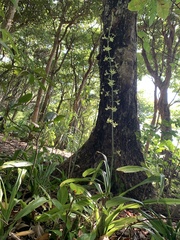
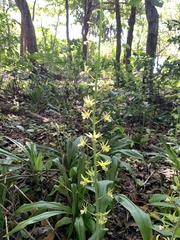
The genus Eulophia belongs to the subfamily Epidendroideae, tribe Cymbidieae, and subtribe Eulophiinae. Eulophia andamanensis is found growing wild in the Little Andaman Islands, where the temperature ranges between 23 and 30 °C and the annual average rainfall is 3473 mm. Tropical evergreen forest floors of Andamans is the habitat of this orchid, and it is scarcely distributed.
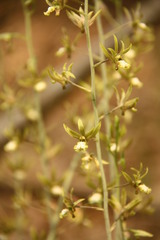
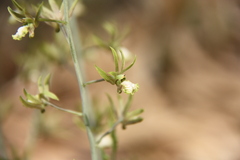
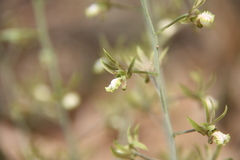
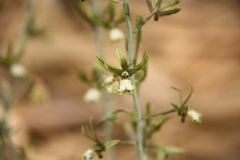
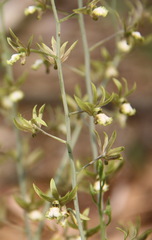
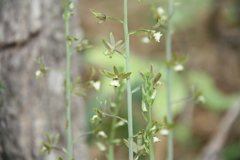
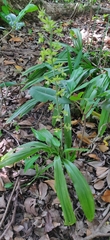
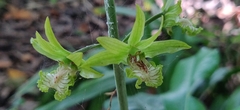
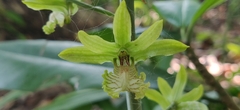
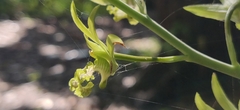
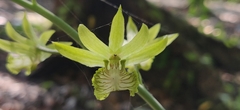
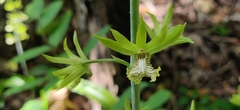
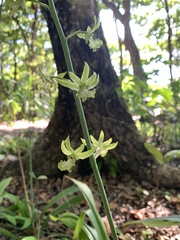
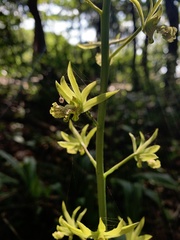
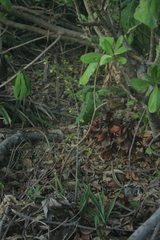
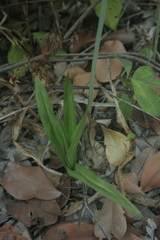
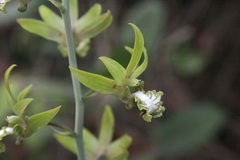
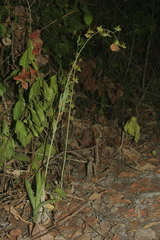
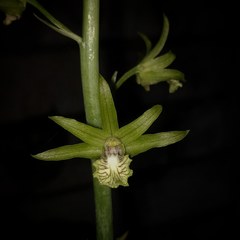
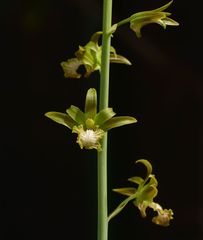
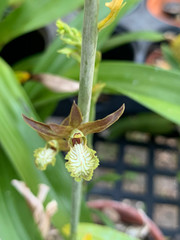
The growth habit is sympodial. The stem at the base is bulbous, with thick roots. The leaves are short during flowering, linear lanceolate. The bracts are shorter than the pedicel, the sepals 2 cm long, the lip shorter than the sepals. The sepals are linear lanceolate, 3–5 nerved, acuminate; both the sepals and petals are pale green in colour, the lip green at the base and white at the centre with maroon horizontal striations. The flowering period is from November to March, with the florets borne on long spikes (0.6–1.3 m long), and last for about 50 days.
...Eulophia andamanensis in languages:
- Thai
- หมูกลิ้ง
- Thai
- ช้างผสมโขลง
Images from inaturalist.org observations:
We recommend you sign up for this excellent, free service.
Parent Taxon
Sibling Taxa
- Eulophia abyssinica
- Eulophia aculeata
- Eulophia acutilabra
- Eulophia adenoglossa
- Eulophia alata
- Eulophia alismatophylla
- Eulophia alta
- Eulophia ambongensis
- Eulophia ambrensis
- Eulophia analamerensis
- Eulophia analavelensis
- Eulophia andamanensis
- Eulophia angolensis
- Eulophia antsingyensis
- Eulophia arenicola
- Eulophia atrovirens
- Eulophia barbata
- Eulophia beravensis
- Eulophia bicallosa
- Eulophia boinensis
- Eulophia bolusii
- Eulophia bosseriana
- Eulophia bouliawongo
- Eulophia brenanii
- Eulophia calantha
- Eulophia calanthoides
- Eulophia calcarata
- Eulophia callichroma
- Eulophia callmanderi
- Eulophia caricifolia
- Eulophia cernua
- Eulophia chrysea
- Eulophia clitellifera
- Eulophia cochlearis
- Eulophia coddii
- Eulophia coeloglossa
- Eulophia cooperi
- Eulophia cordylinophylla
- Eulophia cristata
- Eulophia cucullata
- Eulophia dabia
- Eulophia decaryana
- Eulophia dentata
- Eulophia diffusiflora
- Eulophia ensata
- Eulophia epidendraea
- Eulophia epiphytica
- Eulophia euglossa
- Eulophia exigua
- Eulophia eylesii
- Eulophia falcigera
- Eulophia fernandeziana
- Eulophia filifolia
- Eulophia flabellata
- Eulophia flava
- Eulophia flavescens
- Eulophia flavopurpurea
- Eulophia fridericii
- Eulophia furcata
- Eulophia galbana
- Eulophia galeoloides
- Eulophia gonychila
- Eulophia gracilis
- Eulophia graminea
- Eulophia grandidieri
- Eulophia guineensis
- Eulophia hebdingiana
- Eulophia herbacea
- Eulophia hereroensis
- Eulophia hians
- Eulophia horsfallii
- Eulophia humbertii
- Eulophia ibityensis
- Eulophia katangensis
- Eulophia kyimbilae
- Eulophia lagaligo
- Eulophia lamellata
- Eulophia lanceata
- Eulophia latifolia
- Eulophia latilabris
- Eulophia leachii
- Eulophia leonensis
- Eulophia leontoglossa
- Eulophia livingstoneana
- Eulophia lonchophylla
- Eulophia longisepala
- Eulophia macaulayi
- Eulophia macowanii
- Eulophia macra
- Eulophia macrantha
- Eulophia macrobulbon
- Eulophia maculata
- Eulophia malangana
- Eulophia mangenotiana
- Eulophia massokoensis
- Eulophia meleagris
- Eulophia micrantha
- Eulophia monile
- Eulophia monotropis
- Eulophia moratii
- Eulophia mumbwaensis
- Eulophia nervosa
- Eulophia nuda
- Eulophia nyasae
- Eulophia obstipa
- Eulophia obtusa
- Eulophia ochreata
- Eulophia odontoglossa
- Eulophia orthoplectra
- Eulophia ovalis
- Eulophia palmicola
- Eulophia pardalina
- Eulophia parilamellata
- Eulophia parviflora
- Eulophia parvilabris
- Eulophia pauciflora
- Eulophia penduliflora
- Eulophia petersii
- Eulophia petiolata
- Eulophia peyrotii
- Eulophia plantaginea
- Eulophia platypetala
- Eulophia pratensis
- Eulophia pulchra
- Eulophia quadriloba
- Eulophia ramosa
- Eulophia rauhii
- Eulophia recurva
- Eulophia reticulata
- Eulophia roempleriana
- Eulophia rolfeana
- Eulophia roseovariegata
- Eulophia saundersiana
- Eulophia schlechteri
- Eulophia schweinfurthii
- Eulophia sclerophylla
- Eulophia seleensis
- Eulophia seychellarum
- Eulophia spathulifera
- Eulophia speciosa
- Eulophia stachyodes
- Eulophia stenopetala
- Eulophia streptopetala
- Eulophia subsaprophytica
- Eulophia taitensis
- Eulophia taiwanensis
- Eulophia tanganyikensis
- Eulophia tenella
- Eulophia terrestris
- Eulophia tricristata
- Eulophia tristis
- Eulophia tuberculata
- Eulophia ustulata
- Eulophia venosa
- Eulophia venulosa
- Eulophia welwitschii
- Eulophia zanzibarica
- Eulophia zeyheriana
- Eulophia zollingeri