Fritillaria: taxon details and analytics
- Domain
- Kingdom
- Animalia
- Phylum
- Chordata
- Class
- Appendicularia
- Order
- Copelata
- Family
- Fritillariidae
- Genus
- Fritillaria
- Species
- Scientific Name
- Fritillaria
Summary description from Wikipedia:
Fritillaria
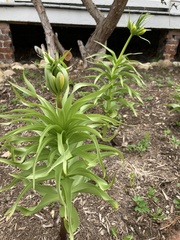
Fritillaria (fritillaries) is a genus of spring flowering herbaceous bulbous perennial plants in the lily family (Liliaceae). The type species, Fritillaria meleagris, was first described in Europe in 1571, while other species from the Middle East and Asia were also introduced to Europe at that time. The genus has about 130–140 species divided among eight subgenera. The flowers are usually solitary, nodding and bell-shaped with bulbs that have fleshy scales, resembling those of lilies. They are known for their large genome size and genetically are very closely related to lilies. They are native to the temperate regions of the Northern Hemisphere, from the Mediterranean and North Africa through Eurasia and southwest Asia to western North America. Many are endangered due to enthusiastic picking.
The name Fritillaria is thought to refer to the checkered pattern of F. meleagris, resembling a box in which dice were carried. Fritillaries are commercially important in horticulture as ornamental garden plants and also in traditional Chinese medicine, which is also endangering some species. Fritillaria flowers have been popular subjects for artists to depict and as emblems of regions and organizations.
...Images from inaturalist.org observations:
We recommend you sign up for this excellent, free service.
Parent Taxon
Sibling Taxa
Child Taxa
- Fritillaria aberrans
- Fritillaria abjornseni
- Fritillaria aequatorialis
- Fritillaria amphigonadis
- Fritillaria antarctica
- Fritillaria arafoera
- Fritillaria borealis
- Fritillaria charybdae
- Fritillaria drygalskii
- Fritillaria fagei
- Fritillaria formica
- Fritillaria fraudax
- Fritillaria gracilis
- Fritillaria haplostoma
- Fritillaria helenae
- Fritillaria lucifer
- Fritillaria megachile
- Fritillaria messanensis
- Fritillaria pacifica
- Fritillaria pellucida
- Fritillaria polaris
- Fritillaria ragusina
- Fritillaria rex
- Fritillaria tenella
- Fritillaria urticans
- Fritillaria venusta