Glycera dibranchiata: taxon details and analytics
- Domain
- Kingdom
- Animalia
- Phylum
- Annelida
- Class
- Polychaeta
- Order
- Phyllodocida
- Family
- Glyceridae
- Genus
- Glycera
- Species
- Glycera dibranchiata
- Scientific Name
- Glycera dibranchiata
Summary description from Wikipedia:
Glycera dibranchiata
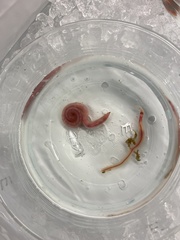
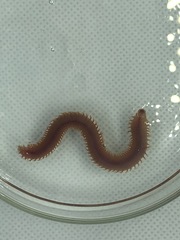
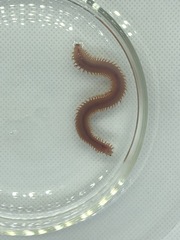
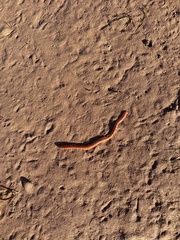
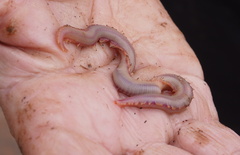
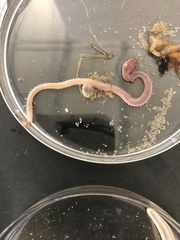
Glycera dibranchiata, also known as one variant of bloodworm, are segmented, red marine worms that grow up to 14-inches in length and have unique copper teeth made up of a mixture of protein, melanin and 10% copper. This copper concentration is the highest among any animal.
These creatures live in tidal flats and hunt their prey by burrowing themselves several meters deep into the sand before attempting to ambush anything they are capable of swallowing.
The way these bloodworms grow their partially-metal teeth is through the transformation of a protein from the bottom of the sea into fangs. The amino acid, referred to as dihydroxyphenylalanine (DOPA), is used to gather copper from the sea floor and then this copper is combined with a protein-rich liquid that is found in ocean water. Using the copper as a catalyst, the worm turns DOPA into melanin that combines with copper to create the creature's fangs.
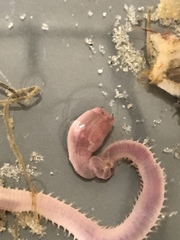
Glycera dibranchiata is considered a marine polychaete, and features a prosboscis equipped with four jaws.
...Glycera dibranchiata in languages:
- Dutch
- Bloedworm
- English
- Bloodworm
Images from inaturalist.org observations:
We recommend you sign up for this excellent, free service.

Parent Taxon
Sibling Taxa
- Glycera alba
- Glycera americana
- Glycera benguellana
- Glycera benhami
- Glycera capitata
- Glycera chirori
- Glycera dibranchiata
- Glycera fallax
- Glycera knoxi
- Glycera lamelliformis
- Glycera lapidum
- Glycera longipinnis
- Glycera macrobranchia
- Glycera nana
- Glycera natalensis
- Glycera onomichiensis
- Glycera ovigera
- Glycera oxycephala
- Glycera papillosa
- Glycera prosobranchia
- Glycera robusta
- Glycera russa
- Glycera subaenea
- Glycera tenuis
- Glycera tesselata
- Glycera tridactyla
- Glycera unicornis