Hoya obscura: taxon details and analytics
- Domain
- Kingdom
- Plantae
- Phylum
- Tracheophyta
- Class
- Magnoliopsida
- Order
- Gentianales
- Family
- Apocynaceae
- Genus
- Hoya
- Species
- Hoya obscura
- Scientific Name
- Hoya obscura
Summary description from Wikipedia:
Hoya obscura
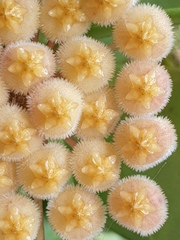
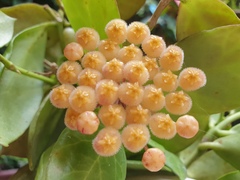
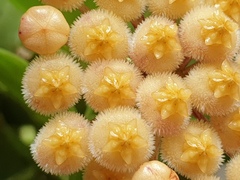
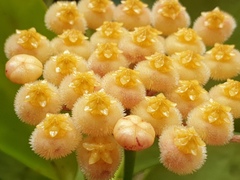
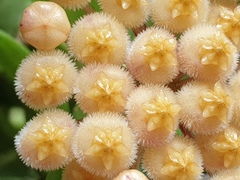
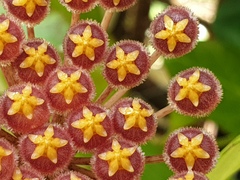
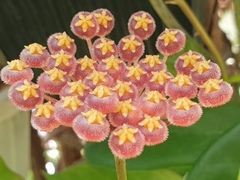
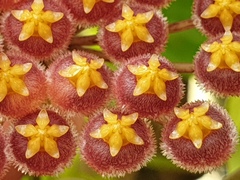
Hoya obscura is a fast-growing, climbing species of Hoya in the dogbane (milkweed) family, Apocynaceae, found in the Philippines. The plant's many aerial roots (which the vine produces along its entire length) will gradually adhere to vertical surfaces nearby, such as buildings, trees or poles, acting as anchors and enabling the plant to receive better sun exposure away from the ground. Adequate light is imperative for photosynthesis and the production of inflorescences; a Hoya with insufficient sun or light exposure will often become visibly "droopy" and lacking in vigor. Likewise, excessive sunlight potentially causes dehydration and sunburn of the vine.
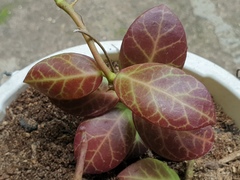
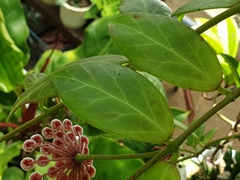
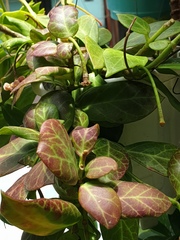
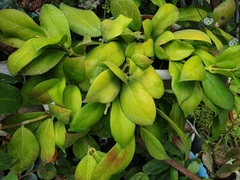
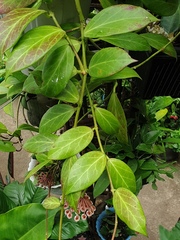
As a species, Hoya obscura is characterized by its diamond-shaped leaves which retain a verdant green hue when grown in shadier areas, but will visibly darken and "stress" to a rich, reddish-maroon color if given more bright, indirect light, or even brief periods of early morning or late afternoon sunlight. As previously stated, excess sunlight can cause burning or desiccation of the plant, especially in summertime or during the peak of the day (when most plants would prefer dappled or indirect light conditions).
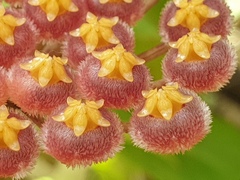
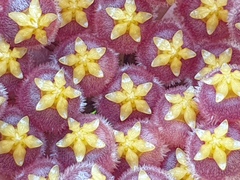
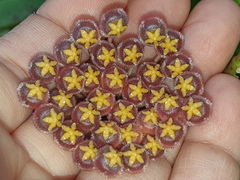
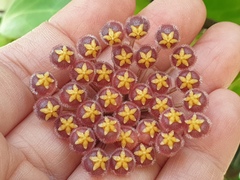
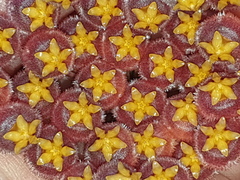
Typically, Hoya obscura is very easy to grow, in appropriate conditions, and may thrive outdoors in Mediterranean, tropical or subtropical regions; it may be grown successfully indoors or in a protected area in temperate climates, especially if given a moss pole or trellis with which to support itself. Indoor-grown vines are generally more suited to mounting or trellising as they lack the direct sunlight exposure of outdoors. The blooms of Hoya obscura are reported to be highly aromatic, possibly amongst some of the most fragrant of any Hoya species.
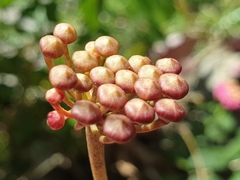
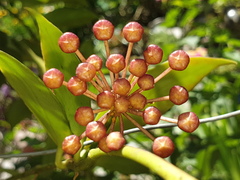
...Images from inaturalist.org observations:
We recommend you sign up for this excellent, free service.
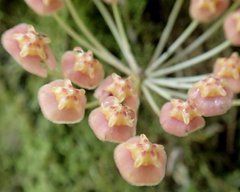
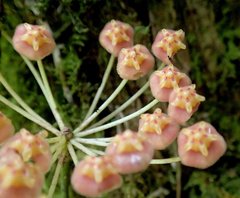
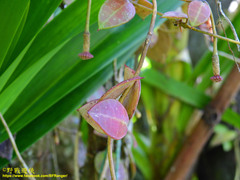
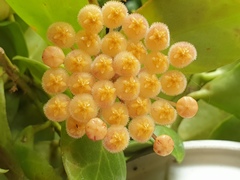
Parent Taxon
Sibling Taxa
- Hoya acanthominima
- Hoya acicularis
- Hoya acuminata
- Hoya aeschynanthoides
- Hoya affinis
- Hoya alagensis
- Hoya albiflora
- Hoya aldrichii
- Hoya alexicaca
- Hoya amorosoae
- Hoya amrita
- Hoya andalensis
- Hoya annaleesoligamiae
- Hoya archboldiana
- Hoya artwhistleri
- Hoya attenuata
- Hoya australis
- Hoya bella
- Hoya benvergarai
- Hoya betchei
- Hoya bhutanica
- Hoya buotii
- Hoya calycina
- Hoya campanulata
- Hoya camphorifolia
- Hoya carnosa
- Hoya caudata
- Hoya chlorantha
- Hoya cinnamomifolia
- Hoya clemensiorum
- Hoya cordata
- Hoya coriacea
- Hoya corollimarginata
- Hoya coronaria
- Hoya crassicaulis
- Hoya crassior
- Hoya cumingiana
- Hoya curtisii
- Hoya danumensis
- Hoya davidcummingii
- Hoya dennisii
- Hoya densifolia
- Hoya deykei
- Hoya diversifolia
- Hoya dolichosparte
- Hoya eitapensis
- Hoya elliptica
- Hoya elmeri
- Hoya endauensis
- Hoya engleriana
- Hoya erythrina
- Hoya erythrostemma
- Hoya faoensis
- Hoya fetuana
- Hoya filiformis
- Hoya finlaysonii
- Hoya fitoensis
- Hoya flagellata
- Hoya forbesii
- Hoya fusca
- Hoya globulifera
- Hoya globulosa
- Hoya guppyi
- Hoya halconensis
- Hoya hamiltoniorum
- Hoya hanhiae
- Hoya heuschkeliana
- Hoya hypolasia
- Hoya imbricata
- Hoya imperialis
- Hoya inconspicua
- Hoya incrassata
- Hoya incurvula
- Hoya inflata
- Hoya isabelchanae
- Hoya kanyakumariana
- Hoya kastbergii
- Hoya kentiana
- Hoya kerrii
- Hoya lacunosa
- Hoya lanataiensis
- Hoya lanceolata
- Hoya lanotooensis
- Hoya lasiantha
- Hoya latifolia
- Hoya lauterbachii
- Hoya linearis
- Hoya linusii
- Hoya longifolia
- Hoya luatekensis
- Hoya macgillivrayi
- Hoya macrophylla
- Hoya magnifica
- Hoya maingayi
- Hoya marananiae
- Hoya mata-ole-afiensis
- Hoya matavanuensis
- Hoya megalantha
- Hoya megalaster
- Hoya meliflua
- Hoya micrantha
- Hoya migueldavidii
- Hoya mindorensis
- Hoya minima
- Hoya mitrata
- Hoya multiflora
- Hoya nervosa
- Hoya nicholsoniae
- Hoya nuuuliensis
- Hoya obovata
- Hoya obscura
- Hoya obtusifolia
- Hoya odorata
- Hoya ofuensis
- Hoya olosegaensis
- Hoya onychoides
- Hoya oreogena
- Hoya pachyclada
- Hoya pandurata
- Hoya parviflora
- Hoya parvifolia
- Hoya patameaensis
- Hoya patella
- Hoya pentaphlebia
- Hoya phuluangensis
- Hoya phyllura
- Hoya platycaulis
- Hoya polyneura
- Hoya pottsii
- Hoya pubicalyx
- Hoya pulchra
- Hoya purpureofusca
- Hoya pusilla
- Hoya pycnophylla
- Hoya retusa
- Hoya revoluta
- Hoya rotundiflora
- Hoya sammannaniana
- Hoya samoa-albiflora
- Hoya samoensis
- Hoya savaiiensis
- Hoya schneei
- Hoya scortechinii
- Hoya seanwhistleriana
- Hoya serpens
- Hoya siamica
- Hoya siariae
- Hoya spartioides
- Hoya spencii
- Hoya sumatrana
- Hoya surigaoensis
- Hoya sussuela
- Hoya tamaleaaea
- Hoya tauensis
- Hoya telosmoides
- Hoya thailandica
- Hoya tiatuilaensis
- Hoya tsiangiana
- Hoya uafatoensis
- Hoya upoluensis
- Hoya versteegii
- Hoya verticillata
- Hoya vitellina
- Hoya wayetii
- Hoya waymaniae
- Hoya whistleri
- Hoya wightii
- Hoya wongii
- Hoya wrayi
- Hoya yvesrocheri
- Hoya × tuafanua