Hydrilla: taxon details and analytics
- Domain
- Kingdom
- Plantae
- Phylum
- Tracheophyta
- Class
- Liliopsida
- Order
- Alismatales
- Family
- Hydrocharitaceae
- Genus
- Hydrilla
- Species
- Scientific Name
- Hydrilla
Summary description from Wikipedia:
Hydrilla
Hydrilla (waterthyme) is a genus of aquatic plants, usually treated as containing just one species — Hydrilla verticillata, but some botanists divide it into several species. It is native to the cool and warm waters of the Old World in Asia, Africa, and Australia, with a sparse, scattered distribution; in Australia it occurs from the Northern Territory to Queensland and New South Wales.
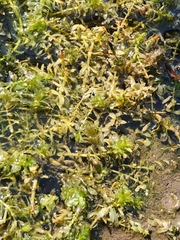
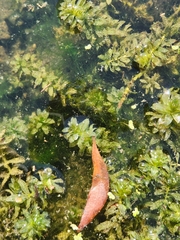
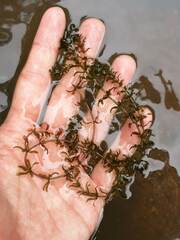
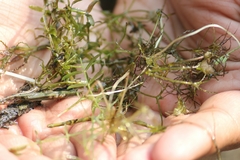
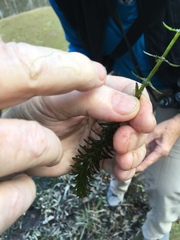
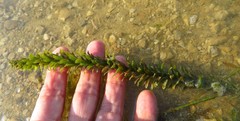
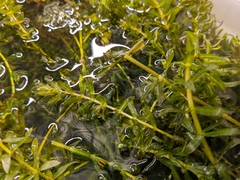
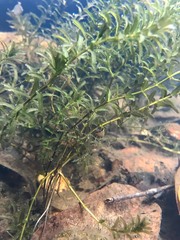
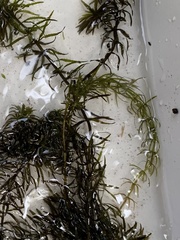
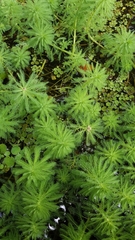
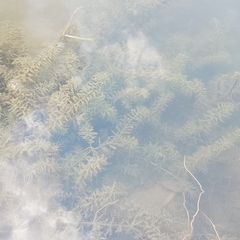
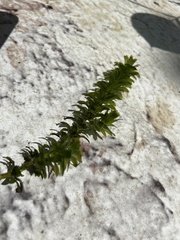
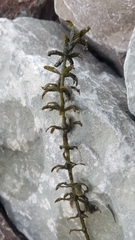
The stems grow up to 2 m long. The leaves are arranged in whorls of two to eight around the stem, each leaf 5–20 mm long and 0.7–2 mm broad, with serrations or small spines along the leaf margins; the leaf midrib is often reddish when fresh. It is monoecious (sometimes dioecious), with male and female flowers produced separately on a single plant; the flowers are small, with three sepals and three petals, the petals 3–5 mm long, transparent with red streaks. It reproduces primarily vegetatively by fragmentation and by rhizomes and turions (overwintering), and flowers are rarely seen. They have air spaces to keep them upright.
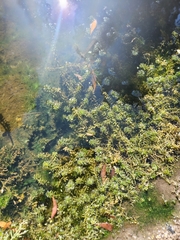
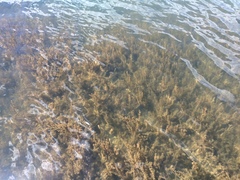
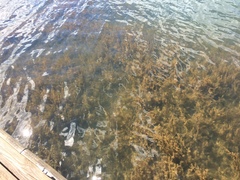
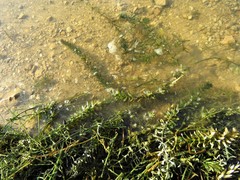
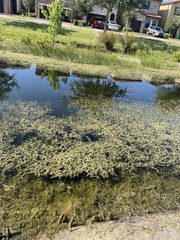
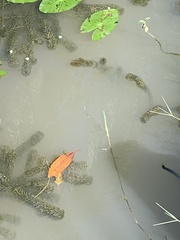
Hydrilla has a high resistance to salinity compared to many other freshwater aquatic plants. It can grow up to an inch a day, producing dense mats of vegetation along the bottom of lakes and rivers. As it grows up to the water's surface, these mats can become several feet thick.
...Hydrilla in languages:
- Chinese
- 水王孫屬
- Czech
- přeslenice
- Dutch
- Hydrilla
- Japanese
- クロモ属
- Polish
- przesiąkra
- Swedish
- vattenkransar
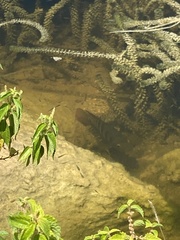
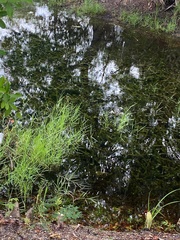
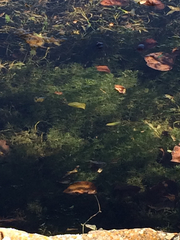
Images from inaturalist.org observations:
We recommend you sign up for this excellent, free service.