Lepidium barnebyanum: taxon details and analytics
- Domain
- Kingdom
- Plantae
- Phylum
- Tracheophyta
- Class
- Magnoliopsida
- Order
- Brassicales
- Family
- Brassicaceae
- Genus
- Lepidium
- Species
- Lepidium barnebyanum
- Scientific Name
- Lepidium barnebyanum
Summary description from Wikipedia:
Lepidium barnebyanum
Lepidium barnebyanum is a rare species of flowering plant in the family Brassicaceae known by the common names Barneby's pepperweed, Barneby's pepper-grass, and Barneby's ridge-cress. It is endemic to Utah, where there is a single population in Duchesne County. It is a federally listed endangered species of the United States.
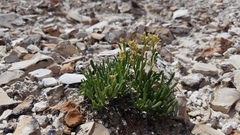
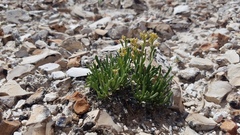
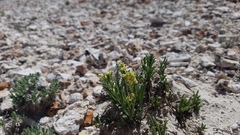
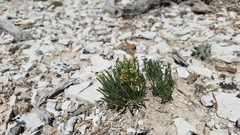
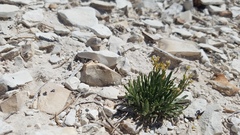
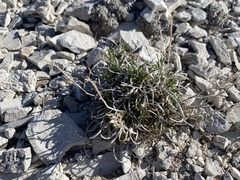
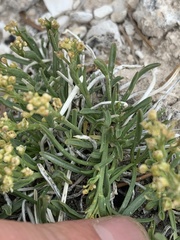
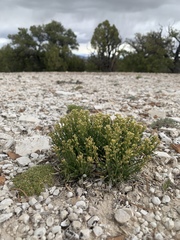
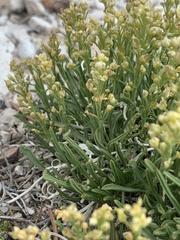
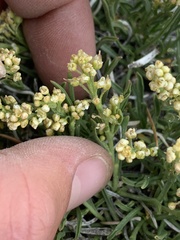
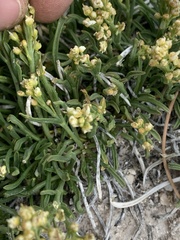
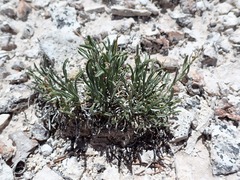
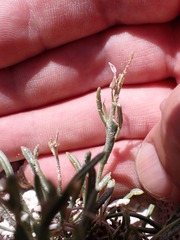
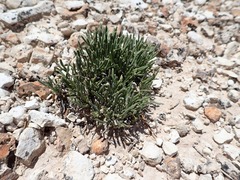
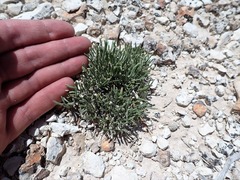
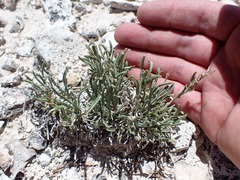
This is a clumpy perennial herb with a woody caudex at the base layered with new leaves and the remains of previous seasons' leaves. The stems grow less than 20 centimeters tall. The leaves are linear in shape and one half centimeter to eight centimeters in length. Most are at the caudex and there are a few smaller ones higher on the stems. The inflorescence is a raceme of many white, cream, or yellowish flowers. Blooming occurs in April and May through June.
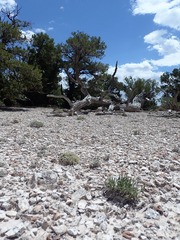
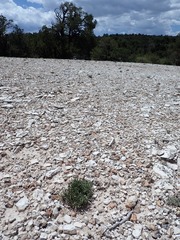
This plant grows in pinyon-juniper woodland and desert scrub on rock outcrops in white shale formations. There are petroleum deposits under the rock. Common plants in the area include Colorado Pinyon (Pinus edulis), Utah juniper (Juniperus osteosperma), Hooker's sandwort (Arenaria hookeri), spiny phlox (Phlox hoodii), Colorado feverfew (Parthenium ligulatum), large-flowered goldenweed (Haplopappus armerioides), stemless hymenoxys (Hymenoxys acaulis), Bateman's buckwheat (Eriogonum batemanii), and table Townsend daisy (Townsendia mensana).
There is one known population of this plant containing about 5000 individuals. The population occurs on a shale substrate that is popular with off-road vehicle enthusiasts whose vehicles damage the habitat. Petroleum exploration is also a threat.
...Lepidium barnebyanum in languages:
- English
- Barneby ridge-cress
Images from inaturalist.org observations:
We recommend you sign up for this excellent, free service.
Parent Taxon
Sibling Taxa
- Lepidium acutidens
- Lepidium aegrum
- Lepidium affghanum
- Lepidium affine
- Lepidium africanum
- Lepidium alluaudii
- Lepidium alyssoides
- Lepidium amissum
- Lepidium apetalum
- Lepidium appelianum
- Lepidium argentinum
- Lepidium aschersonii
- Lepidium aucheri
- Lepidium auriculatum
- Lepidium austrinum
- Lepidium banksii
- Lepidium barnebyanum
- Lepidium basuticum
- Lepidium bidentatum
- Lepidium bipinnatifidum
- Lepidium bipinnatum
- Lepidium boelckeanum
- Lepidium boelckei
- Lepidium bonariense
- Lepidium botschantsevianum
- Lepidium brachyotum
- Lepidium burkartii
- Lepidium campestre
- Lepidium capense
- Lepidium cardamines
- Lepidium cardiophyllum
- Lepidium cartilagineum
- Lepidium castellanum
- Lepidium chalepense
- Lepidium chichicara
- Lepidium coronopus
- Lepidium costaricense
- Lepidium crassum
- Lepidium crenatum
- Lepidium davisii
- Lepidium densiflorum
- Lepidium depressum
- Lepidium desertorum
- Lepidium desvauxii
- Lepidium dictyotum
- Lepidium didymum
- Lepidium draba
- Lepidium eastwoodiae
- Lepidium ecklonii
- Lepidium englerianum
- Lepidium fasciculatum
- Lepidium ferganense
- Lepidium filicaule
- Lepidium filisegmentum
- Lepidium flavum
- Lepidium flexicaule
- Lepidium flexuosum
- Lepidium foliosum
- Lepidium fremontii
- Lepidium ginninderrense
- Lepidium glastifolium
- Lepidium gracile
- Lepidium graminifolium
- Lepidium heterophyllum
- Lepidium hickenii
- Lepidium hirtum
- Lepidium horstii
- Lepidium howei-insulae
- Lepidium huberi
- Lepidium hyssopifolium
- Lepidium integrifolium
- Lepidium jaredii
- Lepidium jujuyanum
- Lepidium juvencum
- Lepidium kirkii
- Lepidium lasiocarpum
- Lepidium latifolium
- Lepidium latipes
- Lepidium lepidioides
- Lepidium leptopetalum
- Lepidium limenophylax
- Lepidium linifolium
- Lepidium lipskyi
- Lepidium meyenii
- Lepidium meyeri
- Lepidium monoplocoides
- Lepidium montanum
- Lepidium mossii
- Lepidium myrianthum
- Lepidium myriocarpum
- Lepidium nanum
- Lepidium naufragorum
- Lepidium navasii
- Lepidium nesophilum
- Lepidium nitidum
- Lepidium oblitum
- Lepidium oblongum
- Lepidium obtusatum
- Lepidium obtusum
- Lepidium oleraceum
- Lepidium oligodontum
- Lepidium ostleri
- Lepidium oxycarpum
- Lepidium oxytrichum
- Lepidium panniforme
- Lepidium papilliferum
- Lepidium papillosum
- Lepidium parodii
- Lepidium paysonii
- Lepidium pedicellosum
- Lepidium peregrinum
- Lepidium perfoliatum
- Lepidium persicum
- Lepidium phlebopetalum
- Lepidium pholidogynum
- Lepidium pinnatifidum
- Lepidium pinnatum
- Lepidium pseudodidymum
- Lepidium pseudohyssopifolium
- Lepidium pseudopapillosum
- Lepidium pseudotasmanicum
- Lepidium puberulum
- Lepidium pumilum
- Lepidium quitense
- Lepidium ramosissimum
- Lepidium rekohuense
- Lepidium rigidum
- Lepidium rotundum
- Lepidium ruderale
- Lepidium santacruzensis
- Lepidium sativum
- Lepidium scandens
- Lepidium schaffneri
- Lepidium schinzii
- Lepidium schlechteri
- Lepidium seditiosum
- Lepidium serra
- Lepidium seydelii
- Lepidium sisymbrioides
- Lepidium solandri
- Lepidium sordidum
- Lepidium spicatum
- Lepidium spinosum
- Lepidium strictum
- Lepidium strongylophyllum
- Lepidium stuckertianum
- Lepidium subulatum
- Lepidium suluense
- Lepidium tandilense
- Lepidium tenuicaule
- Lepidium thurberi
- Lepidium tiehmii
- Lepidium transvaalense
- Lepidium trianae
- Lepidium trifurcum
- Lepidium turczaninowii
- Lepidium vesicarium
- Lepidium villarsii
- Lepidium violaceum
- Lepidium virginicum
- Lepidium werffii
- Lepidium xylodes
- Stubendorffia orientalis