Lobelia telekii: taxon details and analytics
- Domain
- Kingdom
- Plantae
- Phylum
- Tracheophyta
- Class
- Magnoliopsida
- Order
- Asterales
- Family
- Campanulaceae
- Genus
- Lobelia
- Species
- Lobelia telekii
- Scientific Name
- Lobelia telekii
Summary description from Wikipedia:
Lobelia telekii
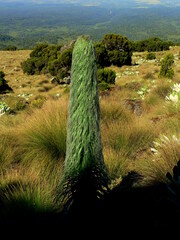
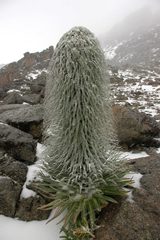
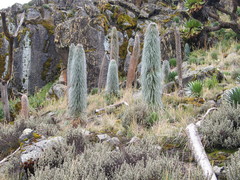
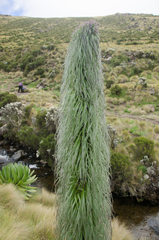
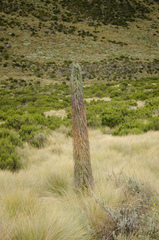
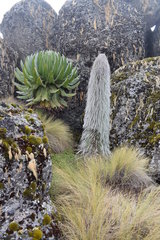
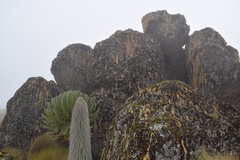
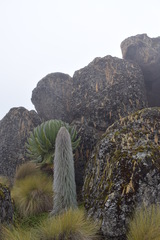
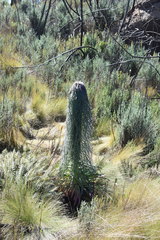
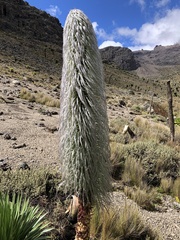
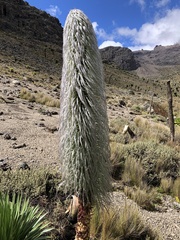
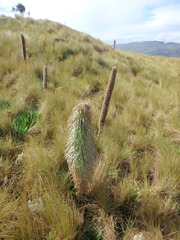
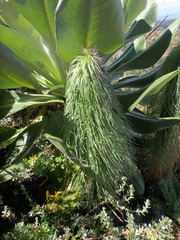
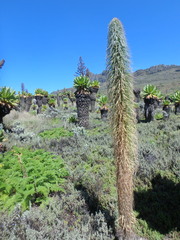
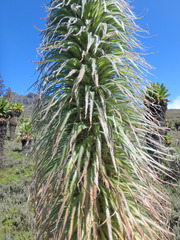
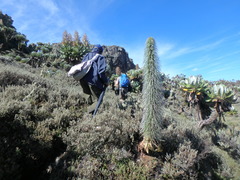
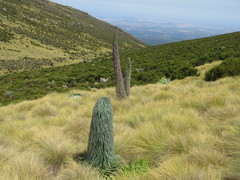
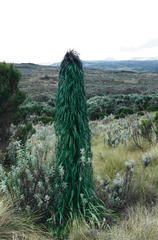
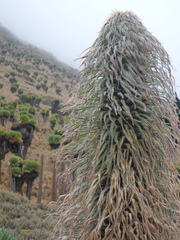
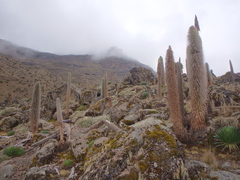
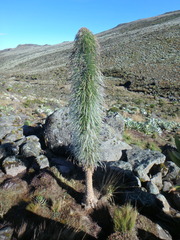
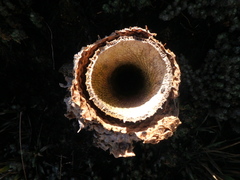
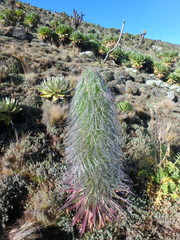
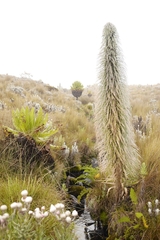
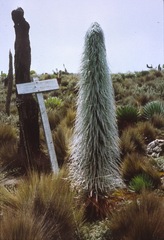
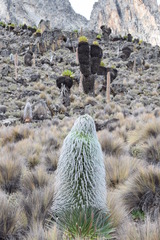
Lobelia telekii is a species of flowering plant in the family Campanulaceae, that is found only in the alpine zones of Mount Kenya, Mount Elgon, and the Aberdare Mountains of East Africa. It occurs at higher altitudes on well-drained sloped hillsides. It is a semelparous species, growing vegetatively for about 40 years and putting putting all its reproductive effort into producing single large inflorescence up to 3 metres (10 ft) tall before dying. Inflorescences of L. telekii also possesses a large pith-volume for internal water storage and marcescent foliage which could provide insulation. It secretes a polysaccharide into this reservoir, which may be useful for its survival in the cold climate. The plant is named after the Austro-Hungarian explorer, Count Sámuel Teleki.
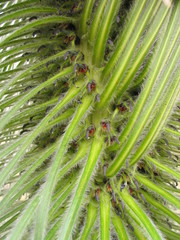
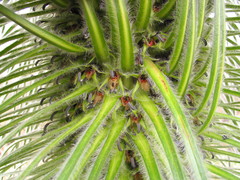
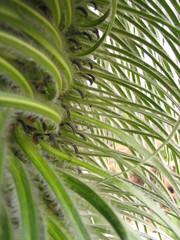
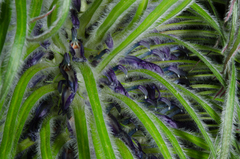
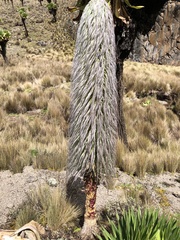
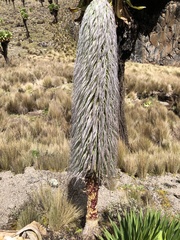
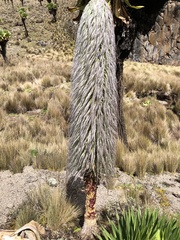
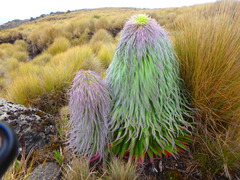
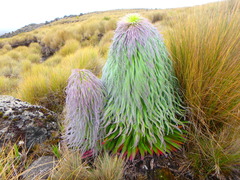
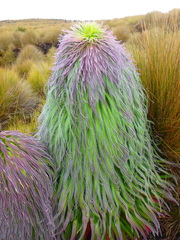
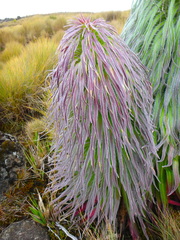
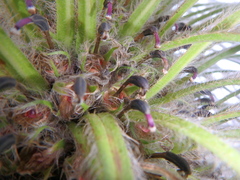
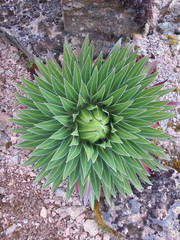
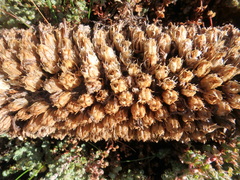
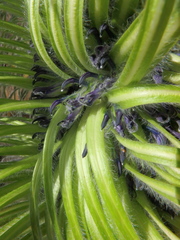
L. telekii plants usually consist of a single rosette, which grows for several decades, flowers once, and then dies (a strategy termed as semelparity). However, a very small number of plants have multiple rosettes connected by an underground stem. Each flower is subtended by a long hairy bract, and the overall appearance has led to the nickname "Cousin Itt lobelia".
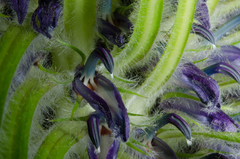
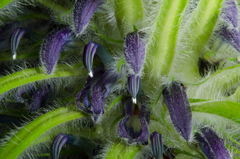
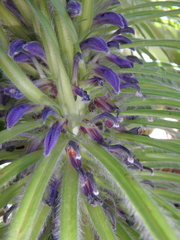
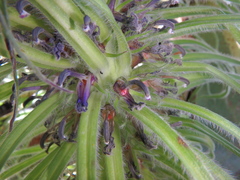
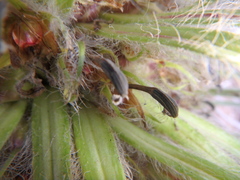
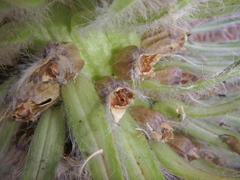
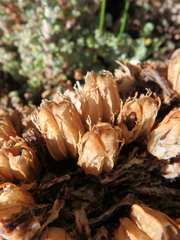
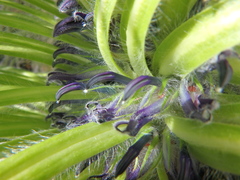
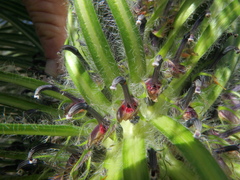
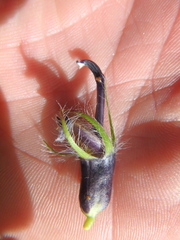
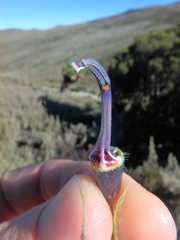
The bird-pollinated flowers of L. telekii are hidden among the large bracts within the inflorescence. The leaves and bracts are blue-green, and the flowers purple. Each flower can produce up to several hundred small (<1mm diameter) dark seeds, which are passively dispersed.
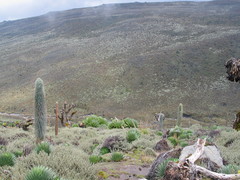
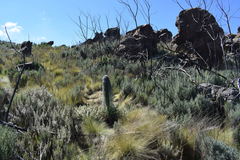
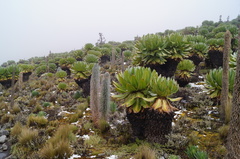
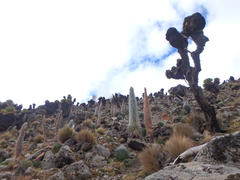
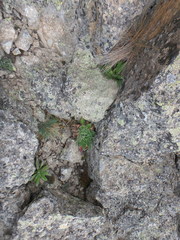
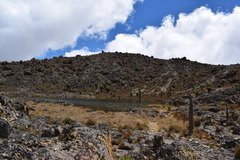
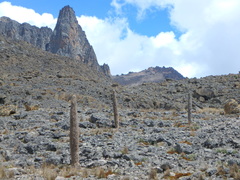
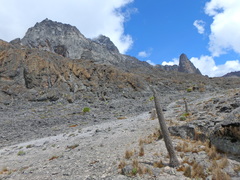
On Mount Kenya, Lobelia telekii occurs at elevations of 3,500–5,000 metres (11,500–16,400 ft). It inhabits the drier hill slopes, while its close relative Lobelia keniensis prefers the moister valley bottoms. Partially fertile hybrids do occur. The hill slopes often have rocky moraines that are home to Mount Kenya rock hyrax, which sometimes eat lobelia leaves and inflorescences, but herbivores are generally deterred by the lobelia's bitter toxic sap, which contains alkaloids, probably including lobeline.
...Lobelia telekii in languages:
- Estonian
- hiidlobeelia
Images from inaturalist.org observations:
We recommend you sign up for this excellent, free service.
Parent Taxon
Sibling Taxa
- Lobelia aberdarica
- Lobelia acrochila
- Lobelia arunachalensis
- Lobelia bambuseti
- Lobelia barnsii
- Lobelia bequaertii
- Lobelia boninensis
- Lobelia brasiliensis
- Lobelia burttii
- Lobelia clavata
- Lobelia columnaris
- Lobelia davidii
- Lobelia deckenii
- Lobelia erectiuscula
- Lobelia eryliae
- Lobelia exaltata
- Lobelia fistulosa
- Lobelia foliiformis
- Lobelia giberroa
- Lobelia glazioviana
- Lobelia gregoriana
- Lobelia hassleri
- Lobelia hilaireana
- Lobelia imperialis
- Lobelia iteophylla
- Lobelia langeana
- Lobelia leschenaultiana
- Lobelia longisepala
- Lobelia lukwangulensis
- Lobelia melliana
- Lobelia mildbraedii
- Lobelia morogoroensis
- Lobelia nicotianifolia
- Lobelia nubigena
- Lobelia organensis
- Lobelia petiolata
- Lobelia philippinensis
- Lobelia pleotricha
- Lobelia proctorii
- Lobelia pyramidalis
- Lobelia rhynchopetalum
- Lobelia ritabeaniana
- Lobelia rosea
- Lobelia sancta
- Lobelia santos-limae
- Lobelia seguinii
- Lobelia sessilifolia
- Lobelia stellfeldii
- Lobelia stricklandiae
- Lobelia stuhlmannii
- Lobelia sulawesiensis
- Lobelia sumatrana
- Lobelia taliensis
- Lobelia telekii
- Lobelia thapsoidea
- Lobelia thuliniana
- Lobelia udzungwensis
- Lobelia wollastonii
- Lobelia xongorolana