Lopholatilus chamaeleonticeps: taxon details and analytics
- Domain
- Kingdom
- Animalia
- Phylum
- Chordata
- Class
- Actinopterygii
- Order
- Acanthuriformes
- Family
- Latilidae
- Genus
- Lopholatilus
- Species
- Lopholatilus chamaeleonticeps
- Scientific Name
- Lopholatilus chamaeleonticeps
Summary description from Wikipedia:
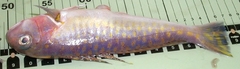
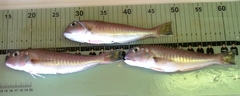
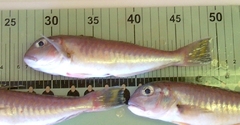
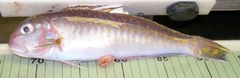
Great northern tilefish
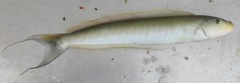
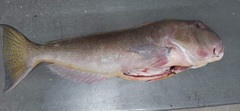
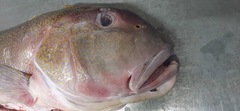
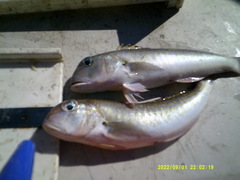
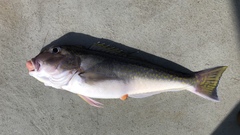
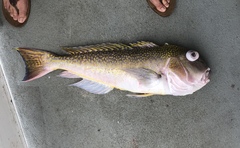
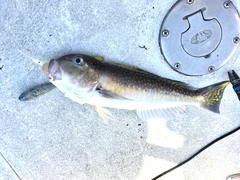
The great northern tilefish (Lopholatilus chamaeleonticeps) or golden tile, is the largest species in the family Malacanthidae (tilefishes). It grows to a length of between 38 and 44 inches (970 and 1,120 mm). The great northern tilefish is a slow-growing and long-lived species that has four stages of life. After hatching from eggs, the larvae are found in plankton. As they grow into juveniles, the individuals seek shelter until finding or making their own burrows. As adults, the tilefish continue to expand their burrows in the sediment throughout their lives. The diet of the larvae is unknown, but presumed to consist of zooplankton; juveniles and adults feed upon various benthic invertebrates, crustaceans, and fish. After reaching sexual maturity between 5 and 7 years of age, females lay eggs throughout the mating season for the male to fertilize, with each female laying an average of 2.3 million eggs.
The great northern tilefish fishery has been regulated to prevent overfishing. Regulations include catch limits and gear restrictions to prevent damage to the species' habitat and population. The result of these regulations has been a rebounding of the population, which led to an increase in the 2012 catch limit in the southern part of the Atlantic seaboard.
...Lopholatilus chamaeleonticeps in languages:
- Chinese
- 脊項弱棘魚
- Czech
- štíhlice velká
- Dutch
- Blauwe tegelvis
- English
- Tilefish
- English
- Golden tilefish
- English
- Great Northern Tilefish
- Japanese
- トサカアマダイ
Images from inaturalist.org observations:
We recommend you sign up for this excellent, free service.