Mesodinium rubrum: taxon details and analytics
- Domain
- Kingdom
- Chromista
- Phylum
- Ciliophora
- Class
- Litostomatea
- Order
- Family
- Mesodiniidae
- Genus
- Mesodinium
- Species
- Mesodinium rubrum
- Scientific Name
- Mesodinium rubrum
Summary description from Wikipedia:
Mesodinium rubrum
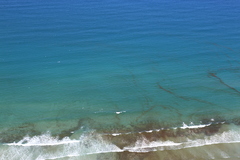
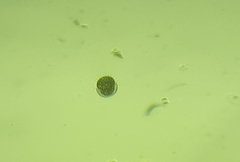
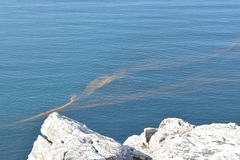
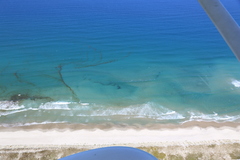
Mesodinium rubrum (or Myrionecta rubra) is a species of ciliates. It constitutes a plankton community and is found throughout the year, most abundantly in spring and fall, in coastal areas. Although discovered in 1908, its scientific importance came into light in the late 1960s when it attracted scientists by the recurrent red colouration it caused by forming massive blooms, that cause red tides in the oceans.
Unlike typical protozoans, M. rubrum can make its own nutrition by photosynthesis. The unusual autotrophic property was discovered in 2006 when genetic sequencing revealed that the photosynthesising organelles, plastids, were derived from the ciliate's principal food, the autotrophic algae called cryptomonads (or cryptophytes). Cryptomonads contain endosymbiont red algae whose internal chloroplasts indirectly enable M. rubrum to photosynthesize using sunlight. Interestingly, the red algae’s chloroplasts themselves evolved via another layer of endosymbiosis, with cyanobacteria. The ciliate is thus both autotrophic and heterotrophic at the same time. This also indicates that it is an example of multiple-stage endosymbiosis in the form of kleptoplasty. Moreover, these “stolen” plastids can be further transferred to additional hosts, as seen in the case of predation of M. rubrum by dinoflagellate planktons of the genus Dinophysis.
In 2009, a new species of Gram-negative bacteria called Maritalea myrionectae was discovered from a cell culture of M. rubrum.
...Images from inaturalist.org observations:
We recommend you sign up for this excellent, free service.