Ophryotrocha: taxon details and analytics
- Domain
- Kingdom
- Animalia
- Phylum
- Annelida
- Class
- Polychaeta
- Order
- Eunicida
- Family
- Dorvilleidae
- Genus
- Ophryotrocha
- Species
- Scientific Name
- Ophryotrocha
Summary description from Wikipedia:
Ophryotrocha
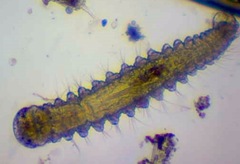
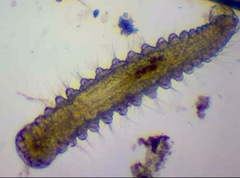
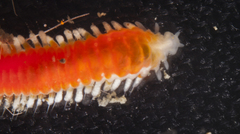
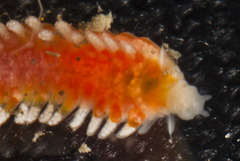
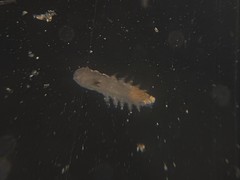
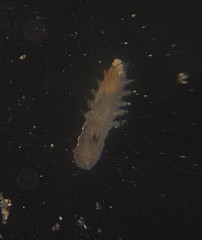
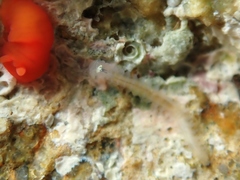
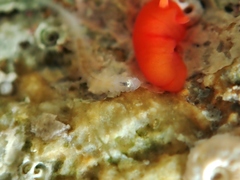
Ophryotrocha is a genus of marine polychaete worms in the family Dorvilleidae.
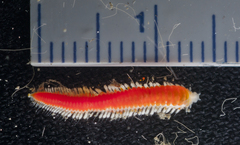
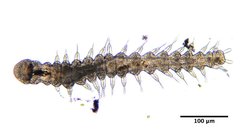
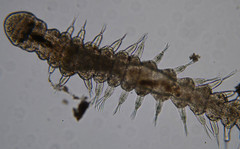
Ophryotrocha comprises a multitude of extant species of polychaete worms with more thought to exist in both shallow and deep waters. Polychaetes of this genus thrive in nutrient-rich environments and can often be found in polluted marine areas that are often sites of human activity.Ophryotrocha's durability allows them to exist in a myriad of stressful environments. Found in the oceans surrounding Europe, Asia, the Mediterranean, and beyond, they can survive in low-oxygen environments and are known to be sulfide tolerant, allowing this genus to live in areas most species cannot. Most worms are between 1 and 5 mm in length, but some deep sea species have been documented to be much larger, ranging from 10 and 25mm. Ophryotrocha is often used as a scientific test species due to their high fecundity, stress tolerance, and myriad of sexual systems found within the genus.
All polychaetes of this genus are laid in batches of roughly 100 eggs and the majority of species start out in a free-moving larval stage as protandrous hermaphrodites. During the protandrist stage of adolescence, small males will start producing sperm when the body length is still small but will continue to stay male if females are present in an effort to avoid the energetic costs of producing oocytes. As this genus continues to grow they develop into tube-building sessile adults. Although no study has documented their entire life process, all Ophryotrocha are documented to breed and die after the dispersal of offspring with parental care given to eggs by one or both sexes resting on the egg cocoon. Parental care is thought to act as a mode for cleaning the cocoon and is documented in all studied species within the genus.
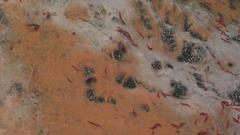
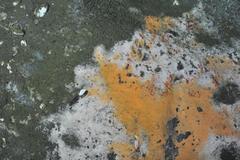
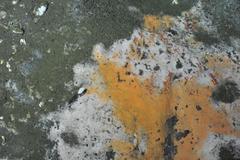
...Images from inaturalist.org observations:
We recommend you sign up for this excellent, free service.
Parent Taxon
Sibling Taxa
- Anchidorvillea
- Apodotrocha
- Apophryotrocha
- Arenotrocha
- Coralliotrocha
- Diaphorosoma
- Dorvillea
- Eliberidens
- Exallopus
- Gymnodorvillea
- Ikosipodoides
- Ikosipodus
- Iphitime
- Mammiphitime
- Marycarmenia
- Meiodorvillea
- Microdorvillea
- Neotenotrocha
- Ophryotrocha
- Ougia
- Parapodrilus
- Parougia
- Petrocha
- Pettiboneia
- Pinniphitime
- Protodorvillea
- Pseudophryotrocha
- Pusillotrocha
- Schistomeringos
- Veneriserva
- Westheideia
Child Taxa
- Ophryotrocha adherens
- Ophryotrocha akessoni
- Ophryotrocha alborana
- Ophryotrocha atlantica
- Ophryotrocha baccii
- Ophryotrocha batillus
- Ophryotrocha bifida
- Ophryotrocha birgittae
- Ophryotrocha cantabrica
- Ophryotrocha claparedei
- Ophryotrocha clava
- Ophryotrocha cosmetandra
- Ophryotrocha costlowi
- Ophryotrocha craigsmithi
- Ophryotrocha cyclops
- Ophryotrocha diadema
- Ophryotrocha dimorphica
- Ophryotrocha dubia
- Ophryotrocha eutrophila
- Ophryotrocha fabriae
- Ophryotrocha flabella
- Ophryotrocha gerlachi
- Ophryotrocha geryonicola
- Ophryotrocha globopalpata
- Ophryotrocha gracilis
- Ophryotrocha hadalis
- Ophryotrocha hartmanni
- Ophryotrocha irinae
- Ophryotrocha japonica
- Ophryotrocha jiaolongi
- Ophryotrocha kagoshimaensis
- Ophryotrocha labidion
- Ophryotrocha labronica
- Ophryotrocha langstrumpae
- Ophryotrocha lipovskyae
- Ophryotrocha lipscombae
- Ophryotrocha littoralis
- Ophryotrocha lobifera
- Ophryotrocha longicollaris
- Ophryotrocha longidentata
- Ophryotrocha lusa
- Ophryotrocha maciolekae
- Ophryotrocha macrovifera
- Ophryotrocha maculata
- Ophryotrocha magnadentata
- Ophryotrocha mammillata
- Ophryotrocha mandibulata
- Ophryotrocha mediterranea
- Ophryotrocha natans
- Ophryotrocha nauarchus
- Ophryotrocha notialis
- Ophryotrocha notoglandulata
- Ophryotrocha obtusa
- Ophryotrocha orensanzi
- Ophryotrocha pachysoma
- Ophryotrocha paragerlachi
- Ophryotrocha paralabidion
- Ophryotrocha permanae
- Ophryotrocha platykephale
- Ophryotrocha puerilis
- Ophryotrocha robusta
- Ophryotrocha rubra
- Ophryotrocha sadina
- Ophryotrocha scarlatoi
- Ophryotrocha schubravyi
- Ophryotrocha scutellus
- Ophryotrocha shieldsi
- Ophryotrocha socialis
- Ophryotrocha spatula
- Ophryotrocha splendida
- Ophryotrocha vellae
- Ophryotrocha vivipara
- Ophryotrocha wubaolingi
- Ophryotrocha zitae