Ranzania laevis: taxon details and analytics
- Domain
- Kingdom
- Animalia
- Phylum
- Chordata
- Class
- Actinopterygii
- Order
- Tetraodontiformes
- Family
- Molidae
- Genus
- Ranzania
- Species
- Ranzania laevis
- Scientific Name
- Ranzania laevis
Summary description from Wikipedia:
Slender sunfish
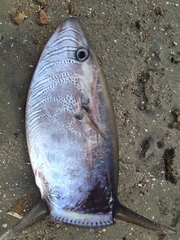
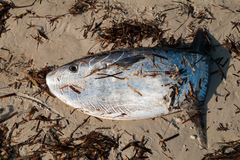
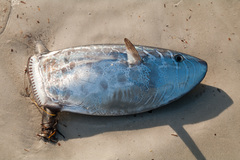
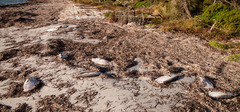
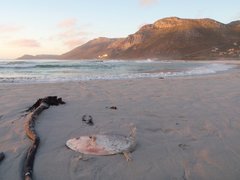
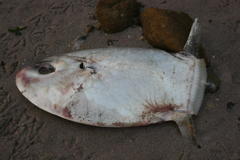
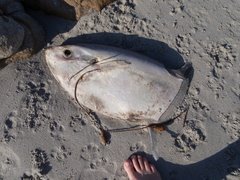
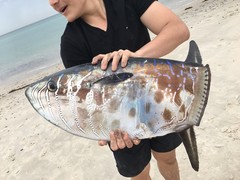
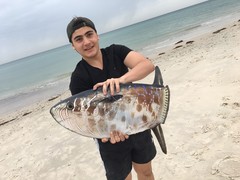
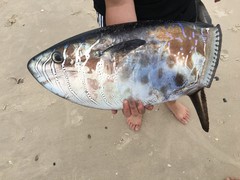
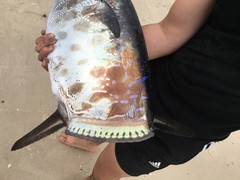
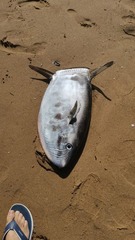
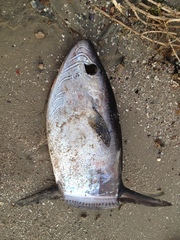
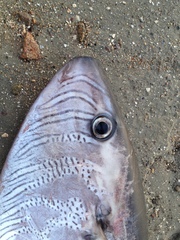
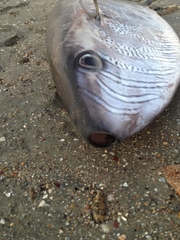
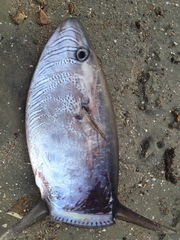
The slender sunfish (Ranzania laevis) is a mola of the family Molidae, the only extant member of the genus Ranzania, found globally in tropical and temperate seas. Its length is up to 1 m (3.3 ft). Several stranding and mass stranding events have occurred on beaches near Albany, Western Australia.
The first South Australian specimen was found at Aldinga in 1944. A cast was made from it, and a replica was made, painted and prepared for display at the South Australian museum that year. Several other individuals have stranded in South Australia at Port Willunga, Netley and West Beach with the latter successfully returned live to deeper water.
In contrast to its much larger relatives in the family Molidae, who are very slow-moving and mostly feed upon jellyfish, salps, and small fish and crustaceans, the slender sunfish is known to mainly feed upon squid, particularly of the family Ommastrephidae, which are known for being very fast-moving, displaying evidence that the slender sunfish itself is a faster-moving and agile predator of squid.
Several other fossil species of Ranzania are known:
- †Ranzania grahami Weems, 1985 - Middle Miocene (Langhian/Serravallian) of Virginia, USA
- †Ranzania ogaii Uyeno & Sakamoto, 1994 - Middle Miocene (Langhian) of Saitama, Japan
- †Ranzania tenneyorum Weems, 1985 - Early Miocene (Burdigalian) of Virginia, USA
- †Ranzania zappai Carnevale, 2007 - Middle Miocene (Serravallian) of Italy (named for Frank Zappa)
In addition, a partial fossil of an indeterminate Ranzania is known from the latest Miocene (Messinian) of Algeria. An indeterminate Early Miocene-aged molid, known from a single fossil beak from the Gaiman Formation of Chubut, Argentina, may also be that of Ranzania; this fossil is notable for representing the southernmost record of fossil Tetraodontiformes. During the warmer climate of the Miocene, the now-frigid coast of Chubut may have been more hospitable for pelagic molids like Ranzania.
...Ranzania laevis in languages:
- Afrikaans
- Rompvis
- Arabic
- سمكة الشمس النحيلة
- Arabic
- مولا نحيلة
- Chinese
- 斑點長翻車魨
- Czech
- měsíčník protáhlý
- English
- Slender Sunfish
- English
- Truncated Sunfish
- English
- Ranzania
- English
- Oblong Sunfish
- English
- Trunkfish
- English
- Short Sunfish
- English
- Slender Mola
- English
- Dwarf sunfish
- French
- Poisson-lune tronqué
- Japanese
- クサビフグ
- Portuguese
- Peixe-lua-comprido
- Portuguese
- Peixe-roda
- Russian
- Овальная луна-рыба
Images from inaturalist.org observations:
We recommend you sign up for this excellent, free service.