Rhizocephala: taxon details and analytics
- Domain
- Kingdom
- Animalia
- Phylum
- Arthropoda
- Class
- Hexanauplia
- Order
- Family
- Genus
- Species
- Scientific Name
- Rhizocephala
Summary description from Wikipedia:
Rhizocephala
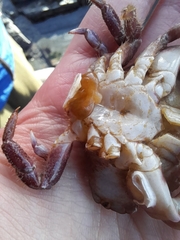
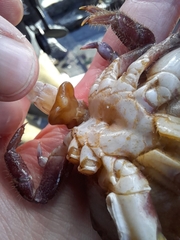
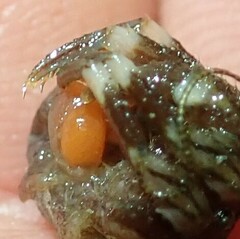
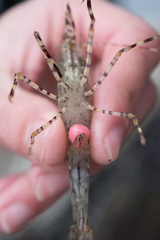
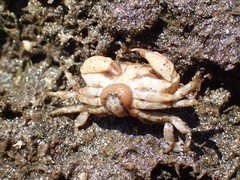
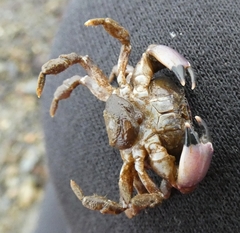
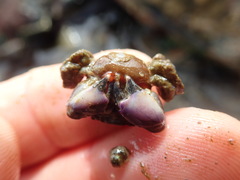
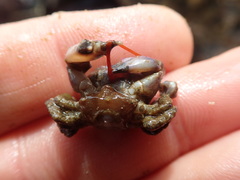
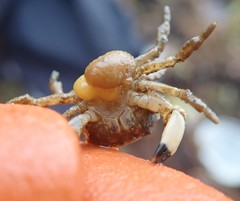
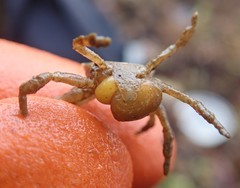
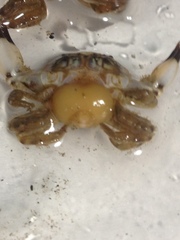
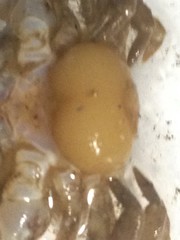
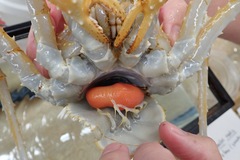
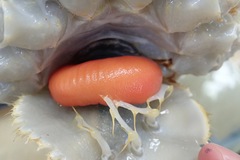
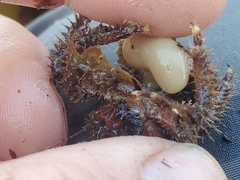
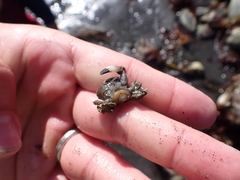
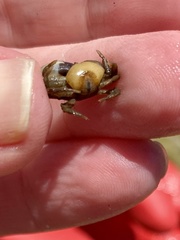
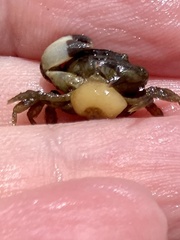
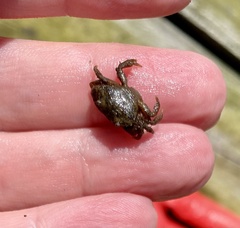
Rhizocephala are derived barnacles that are parasitic castrators. Their hosts are mostly decapod crustaceans, but include Peracarida, mantis shrimps and thoracican barnacles. Their habitats range from the deep ocean to freshwater. Together with their sister groups Thoracica and Acrothoracica, they make up the subclass Cirripedia. Their body plan is uniquely reduced in an extreme adaptation to their parasitic lifestyle, and makes their relationship to other barnacles unrecognisable in the adult form. They also exhibit the most extreme sexual dimorphism of all known animals. The females are parasites who inject themselves into a host and take over their bodies through a network of filaments, while the males are hyperparasites who inject themselves into a settled female and cease to exist as independent organisms through the degeneration of all tissues except the ones responsible for spermatogenesis. The name Rhizocephala derives from the Ancient Greek roots ῥίζα (rhiza, "root") and κεφαλή (kephalē, "head"), describing the adult female, which mostly consists of a network of thread-like extensions penetrating the body of the host.
...Rhizocephala in languages:
- Czech
- kořenohlavci
- English
- Parasitic Barnacles
- English
- Rhizocephalans
- French
- Rhizocéphales
- Hungarian
- Élősdi kacslábúak
- Japanese
- 根頭上目
- Japanese
- アケントロゴン目
- Japanese
- ケントロゴン目
- Russian
- Корнеголовые
- Swedish
- rotfotingar
Images from inaturalist.org observations:
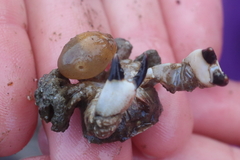
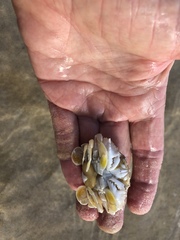
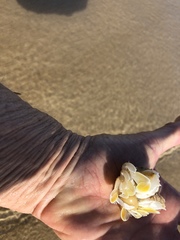
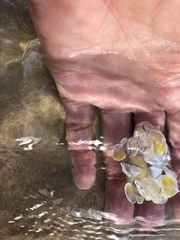
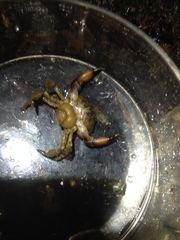
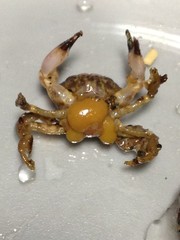
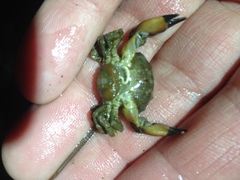
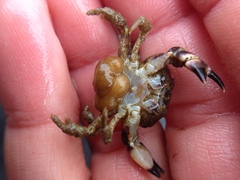
We recommend you sign up for this excellent, free service.