Sargochromis: taxon details and analytics
- Domain
- Kingdom
- Animalia
- Phylum
- Chordata
- Class
- Actinopterygii
- Order
- Cichliformes
- Family
- Cichlidae
- Genus
- Sargochromis
- Species
- Scientific Name
- Sargochromis
Summary description from Wikipedia:
Sargochromis
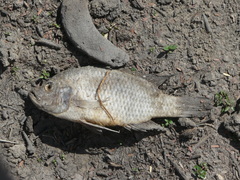
Sargochromis is a genus of haplochromine cichlids native to freshwater habitats in Southern Africa, where found in the upper and middle Zambezi basin, Okavango delta, Cunene basin, Cuvelai basin and southeastern Congo Basin. They are typically known as happies (a name also used for some other haplocromines) or smallmouths. The latter name refers to their small mouth compared to their close relatives, the largemouths of the genus Serranochromis. Unlike the species in that genus which mostly feed on other fish, Sargochromis mostly feed on invertebrates (especially molluscs and aquatic insects), but in some species plant material (especially seeds) is important. On occasion they will also eat small fish, and the stomachs of S. carlottae and S. codringtonii commonly contain fish scales, but whether these are already-lost scales that are picked off the bottom or they are actively bumped off large fish is unknown. Some of the species that feed heavily on aquatic snails have been used for biological pest control. Sargochromis are mouthbrooders. Depending on the exact species, they reach a maximum total length of 20 to 48 cm (8–19 in).
Sargochromis support important local fisheries, and some are also considered game fish. Although a few species have quite small distributions, they generally remain fairly common overall. All Sargochromis species are considered least concern (not threatened) by the IUCN, except the relatively poorly known S. thysi, which is considered data deficient (available information is insufficient for determining its conservation status).
...Sargochromis in languages:
- English
- Happies
- Russian
- Саргохромисы
Images from inaturalist.org observations:
We recommend you sign up for this excellent, free service.
Parent Taxon
Sibling Taxa
- Abactochromis
- Allochromis
- Alticorpus
- Altolamprologus
- Anomalochromis
- Aristochromis
- Asprotilapia
- Astatoreochromis
- Astatotilapia
- Aulonocara
- Aulonocranus
- Baileychromis
- Bathybates
- Benitochromis
- Benthochromis
- Boulengerochromis
- Buccochromis
- Callochromis
- Caprichromis
- Cardiopharynx
- Chalinochromis
- Champsochromis
- Cheilochromis
- Chetia
- Chilochromis
- Chilotilapia
- Chindongo
- Chromidotilapia
- Coelotilapia
- Congochromis
- Congolapia
- Copadichromis
- Coptodon
- Corematodus
- Ctenochromis
- Ctenopharynx
- Cunningtonia
- Cyathochromis
- Cyathopharynx
- Cyclopharynx
- Cynotilapia
- Cyphotilapia
- Cyprichromis
- Cyrtocara
- Danakilia
- Dimidiochromis
- Diplotaxodon
- Divandu
- Docimodus
- Ectodus
- Enantiopus
- Enigmatochromis
- Eretmodus
- Etia
- Exochochromis
- Fossorochromis
- Genyochromis
- Gephyrochromis
- Gnathochromis
- Gobiocichla
- Grammatotria
- Greenwoodochromis
- Haplochromis
- Haplotaxodon
- Hemibates
- Hemichromis
- Hemitaeniochromis
- Hemitilapia
- Heterochromis
- Heterotilapia
- Interochromis
- Iodotropheus
- Iranocichla
- Julidochromis
- Konia
- Labeotropheus
- Labidochromis
- Lamprologus
- Lepidiolamprologus
- Lestradea
- Lethrinops
- Lichnochromis
- Limbochromis
- Limnochromis
- Limnotilapia
- Lithochromis
- Lobochilotes
- Lufubuchromis
- Maylandia
- Mbipia
- Mchenga
- Melanochromis
- Microdontochromis
- Myaka
- Mylochromis
- Naevochromis
- Nanochromis
- Neochromis
- Neolamprologus
- Nimbochromis
- Nyassachromis
- Ophthalmotilapia
- Oreochromis
- Orthochromis
- Otopharynx
- Palaeoplex
- Pallidochromis
- Paracyprichromis
- Paragobiocichla
- Paralabidochromis
- Parananochromis
- Pelmatochromis
- Pelmatolapia
- Pelvicachromis
- Perissodus
- Petrochromis
- Petrotilapia
- Pharyngochromis
- Placidochromis
- Protomelas
- Pseudocrenilabrus
- Pseudosimochromis
- Pseudotropheus
- Pterochromis
- Pundamilia
- Pungu
- Pyxichromis
- Reganochromis
- Rhamphochromis
- Rubricatochromis
- Sargochromis
- Sarotherodon
- Schubotzia
- Schwetzochromis
- Sciaenochromis
- Serranochromis
- Shuja
- Simochromis
- Spathodus
- Steatocranus
- Stigmatochromis
- Stomatepia
- Taeniochromis
- Taeniolethrinops
- Tangachromis
- Tanganicodus
- Teleogramma
- Telmatochromis
- Thoracochromis
- Thysochromis
- Tilapia
- Tramitichromis
- Trematocara
- Trematochromis
- Trematocranus
- Triglachromis
- Tristramella
- Tropheops
- Tropheus
- Tylochromis
- Tyrannochromis
- Variabilichromis
- Wallaceochromis
- Xenochromis
- Xenotilapia
- Yssichromis