Spongia officinalis: taxon details and analytics
- Domain
- Kingdom
- Animalia
- Phylum
- Porifera
- Class
- Demospongiae
- Order
- Dictyoceratida
- Family
- Spongiidae
- Genus
- Spongia
- Species
- Spongia officinalis
- Scientific Name
- Spongia officinalis
Summary description from Wikipedia:
Spongia officinalis
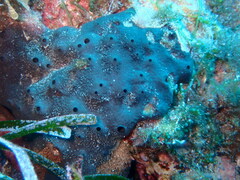
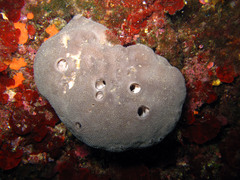
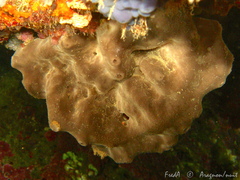
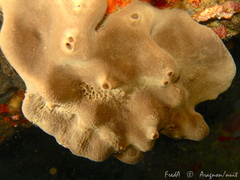
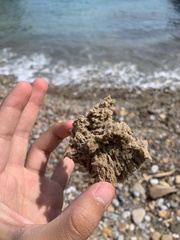
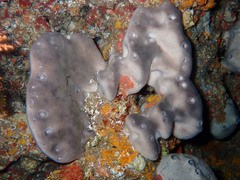
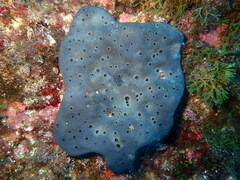
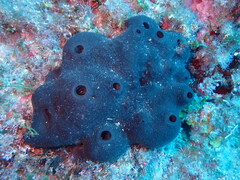
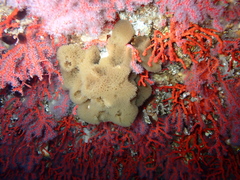
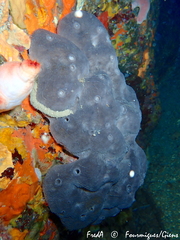
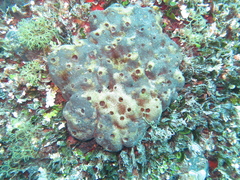
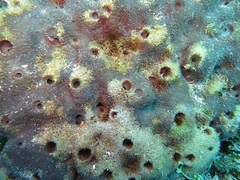
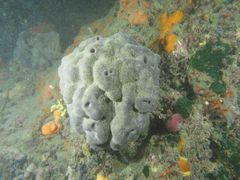
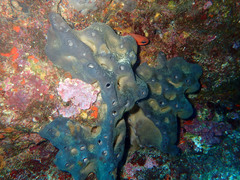
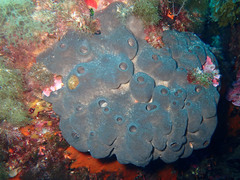
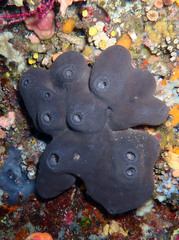
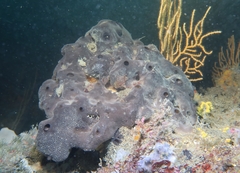
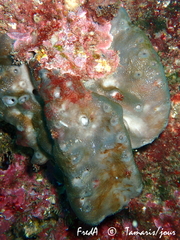
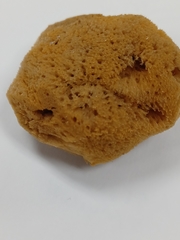
Spongia officinalis, better known as a variety of bath sponge, is a commercially used sea sponge. Individuals grow in large lobes with small openings and are formed by a mesh of primary and secondary fibers. It is light grey to black in color. It is found throughout the Mediterranean Sea up to 100 meters deep on rocky or sandy surfaces.
Spongia officinalis can reproduce both asexually, through budding or fragmentation, or sexually. Individuals can be dioecious or sequential hermaphrodites. The free-swimming larvae are lecithotrophic and grow slowly after attaching to a benthic surface.
Humans use and interact with S. officinalis in a variety of ways. Harvested sponges have been used throughout history for many purposes, including washing and painting. Over-harvesting and sponge disease have led to a decrease in population. Sponge fishing practices have slowly changed over time as new technology has developed and sponge farming is now in use to decrease stress on wild S. officinalis populations. Sponge farming is also recommended as a solution to reducing marine organic pollution, especially from fish farms.
...Spongia officinalis in languages:
- Croatian
- Spužva
- Czech
- houba mycí
- English
- Bath Sponge
- English
- Glove Sponge
- French
- Éponge de toilette
- Galician
- Pan mouro
- German
- Gewöhnlicher Badeschwamm
- Italian
- Spugna comune
- Italian
- Spugna da bagno
- Japanese
- モクヨクカイメン
Images from inaturalist.org observations:
We recommend you sign up for this excellent, free service.