Trioceros: taxon details and analytics
- Domain
- Kingdom
- Animalia
- Phylum
- Chordata
- Class
- Reptilia
- Order
- Squamata
- Family
- Chamaeleonidae
- Genus
- Trioceros
- Species
- Scientific Name
- Trioceros
Summary description from Wikipedia:
Trioceros
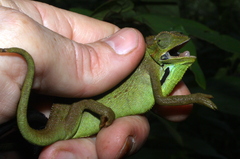
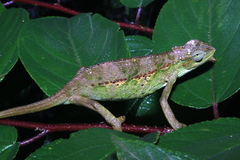
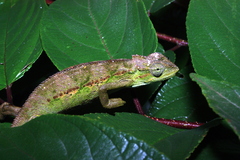
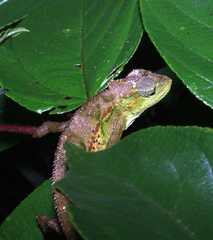
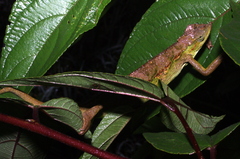
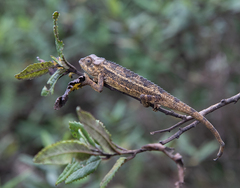
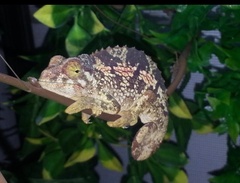
Trioceros is a genus of lizards in the family Chamaeleonidae, the chameleons, native to lowlands and highlands in the African mainland, ranging from Ethiopia south to Mozambique and west as far as Ghana. Trioceros was considered a subgenus of the genus Chamaeleo until 2009, when it was elevated to full genus level.
Trioceros vary greatly in appearance and size. Many species in the genus have various ornaments, such as one to four horns on the head, crests on the nape or throat, or spines or sail-like structures on the top of the back or tail. They are primarily found in adult males, but generally reduced or even absent in females, and there are also many species in the genus where both sexes lack conspicuous ornaments. Although horn-like structures are found in certain other chameleon genera, Trioceros is the only where it can be cylindrical, annulated and bony.
Trioceros contains species that lay eggs (similar to most other chameleon genera) and species that give birth to live young (similar to only Bradypodion). It is likely that giving birth to live young is an adaption to temperature, as it in Trioceros generally is found in species from highlands. The relatively cold highland climate slows the development of eggs laid in the ground; when instead retained inside the body until birth, a female can actively sun bask to increase the temperature.
...Trioceros in languages:
- Danish
- Ækvatoriale Kamæleoner
- English
- Horned Chameleons
- English
- Equatorial Chameleons
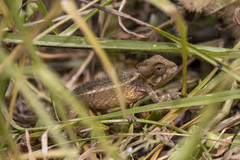
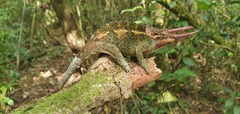
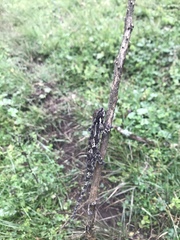
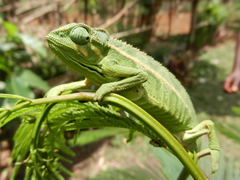
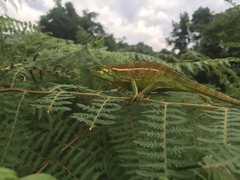
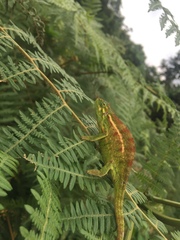
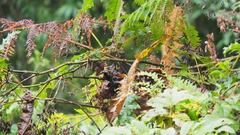
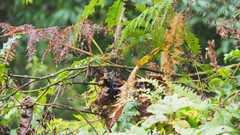
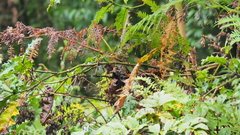
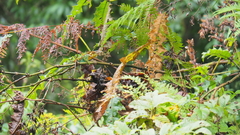
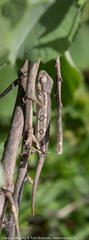
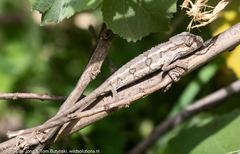
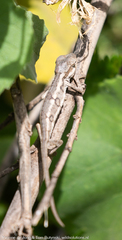
Images from inaturalist.org observations:
We recommend you sign up for this excellent, free service.
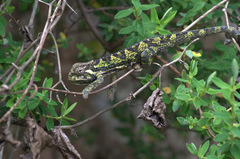
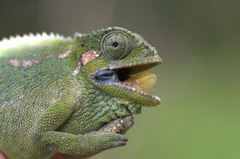
Parent Taxon
Sibling Taxa
Child Taxa
- Trioceros affinis
- Trioceros balebicornutus
- Trioceros bitaeniatus
- Trioceros camerunensis
- Trioceros chapini
- Trioceros conirostratus
- Trioceros cristatus
- Trioceros deremensis
- Trioceros ellioti
- Trioceros feae
- Trioceros fuelleborni
- Trioceros goetzei
- Trioceros hanangensis
- Trioceros harennae
- Trioceros hoehnelii
- Trioceros incornutus
- Trioceros ituriensis
- Trioceros jacksonii
- Trioceros johnstoni
- Trioceros kinangopensis
- Trioceros kinetensis
- Trioceros laterispinis
- Trioceros marsabitensis
- Trioceros melleri
- Trioceros montium
- Trioceros narraioca
- Trioceros ntunte
- Trioceros nyirit
- Trioceros oweni
- Trioceros perreti
- Trioceros pfefferi
- Trioceros quadricornis
- Trioceros rudis
- Trioceros schoutedeni
- Trioceros schubotzi
- Trioceros serratus
- Trioceros sternfeldi
- Trioceros tempeli
- Trioceros werneri
- Trioceros wiedersheimi
- Trioceros wolfgangboehmei