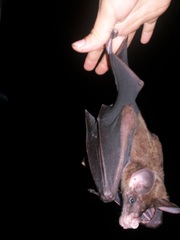
Vampyrum spectrum: taxon details and analytics
- Domain
- Kingdom
- Animalia
- Phylum
- Chordata
- Class
- Mammalia
- Order
- Chiroptera
- Family
- Phyllostomidae
- Genus
- Vampyrum
- Species
- Vampyrum spectrum
- Scientific Name
- Vampyrum spectrum
Summary description from Wikipedia:
Spectral bat
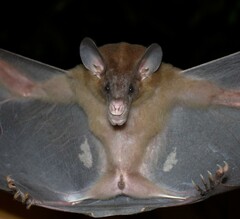
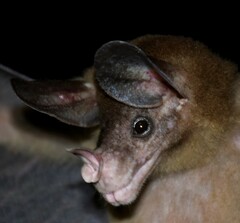
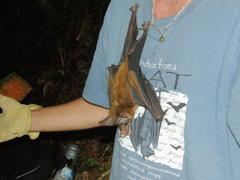
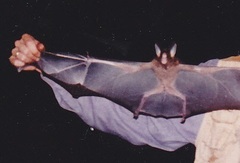
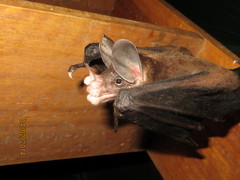
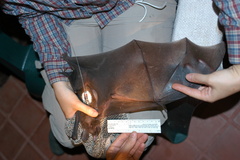
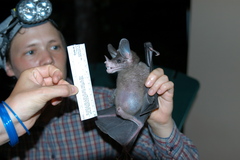
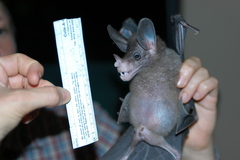
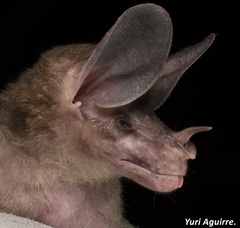
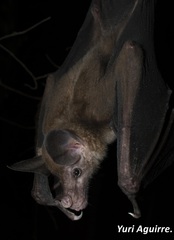
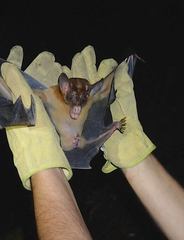
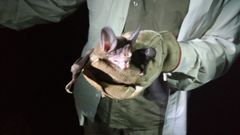
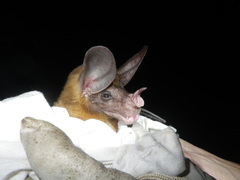
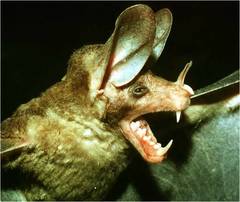
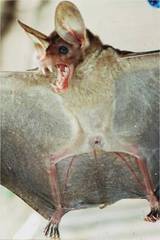
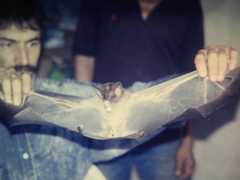
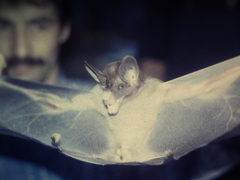
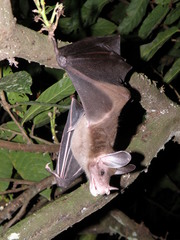
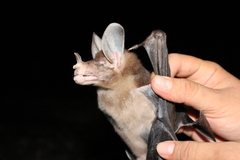
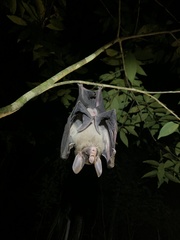
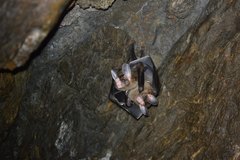
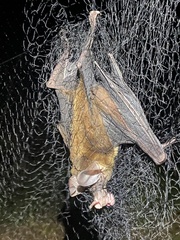
The spectral bat (Vampyrum spectrum), also called the great false vampire bat, great spectral bat, American false vampire bat or Linnaeus's false vampire bat, is a large, carnivorous leaf-nosed bat found in Mexico, Central America, and South America. It is the only member of the genus Vampyrum; its closest living relative is the big-eared woolly bat. It is the largest bat species in the New World, as well as the largest carnivorous bat: its wingspan is 0.7–1.0 m (2.3–3.3 ft). It has a robust skull and teeth, with which it delivers a powerful bite to kill its prey. Birds are frequent prey items, though it may also consume rodents, insects, and other bats.
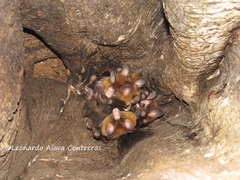
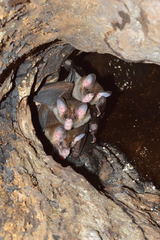
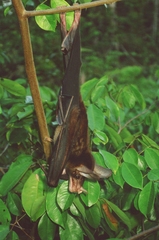
Unlike the majority of bat species, it is monogamous. Colonies consist of an adult male and female and their offspring. The adult male will bring food back to the roost to provision the adult female and their offspring. Colonies generally roost in tree hollows, though individuals may roost in caves. Due to habitat destruction and its low population density, it is listed as a near-threatened species by the International Union for Conservation of Nature (IUCN).
...Vampyrum spectrum in languages:
- Bokmål
- Stor Spydnese
- Czech
- listonos nosatý
- Dutch
- Vampiervleermuis
- English
- spectral bat
- English
- False vampire bat
- Finnish
- isopetoleikko
- French
- Faux-vampire de Linné
- French
- Chauve-souris javelot
- French
- Chauve-souris spectre
- French
- Chauve-souris spectrale
- French
- Faux-Vampire spectre
- German
- Große Spießblattnase
- Russian
- Гигантский лжевампир
- Russian
- Ложный вампир
- Russian
- Большой листонос
Images from inaturalist.org observations:
We recommend you sign up for this excellent, free service.