Phallus ravenelii: taxon details and analytics
- Domain
- Kingdom
- Fungi
- Phylum
- Basidiomycota
- Class
- Agaricomycetes
- Order
- Phallales
- Family
- Phallaceae
- Genus
- Phallus
- Species
- Phallus ravenelii
- Scientific Name
- Phallus ravenelii
Summary description from Wikipedia:
Phallus ravenelii
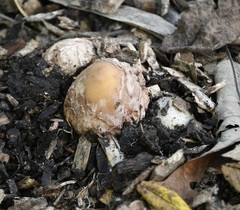
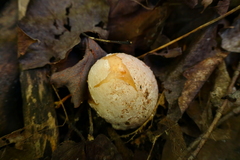
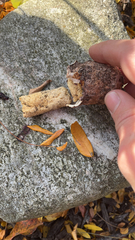
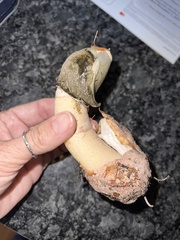
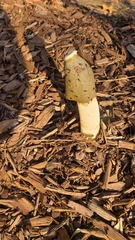
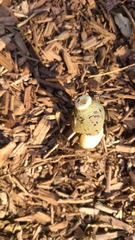
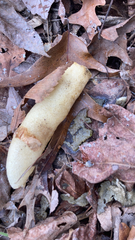
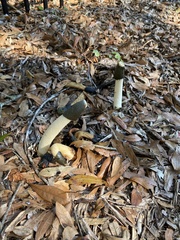
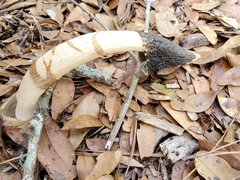
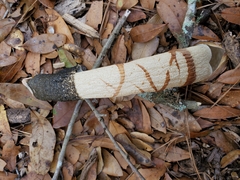
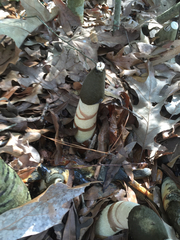
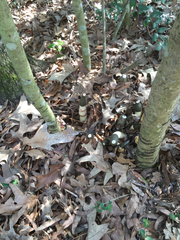
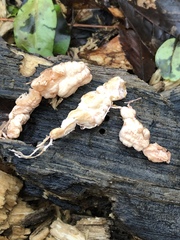
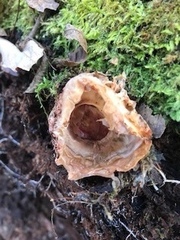
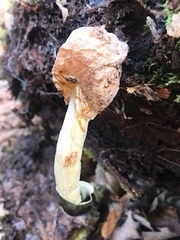
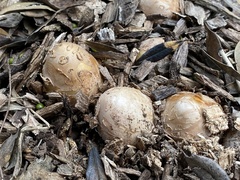
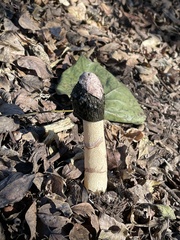
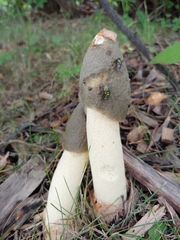
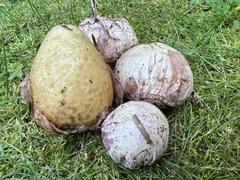
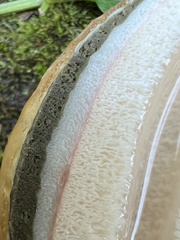
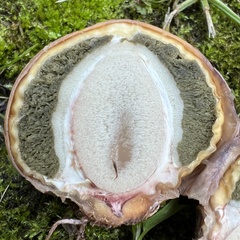
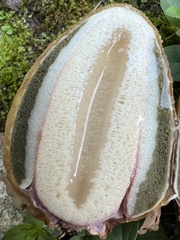
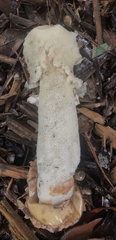
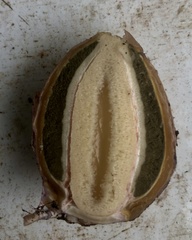
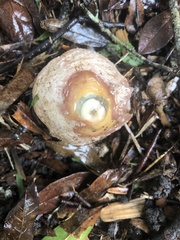
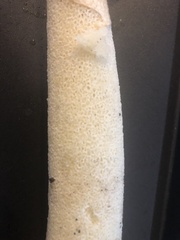
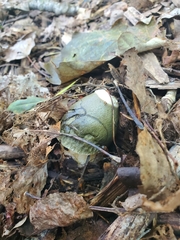
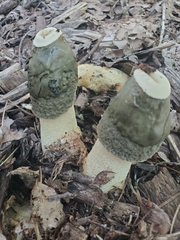
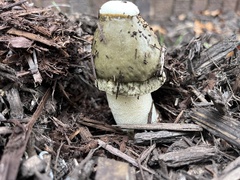
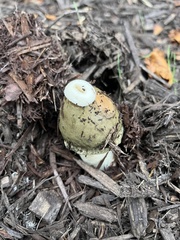
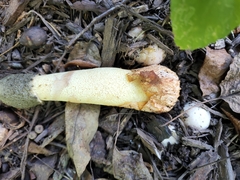
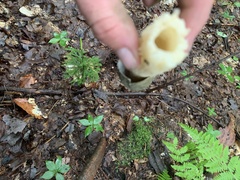
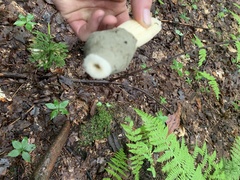
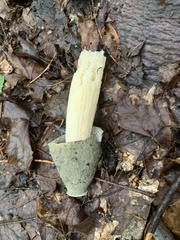
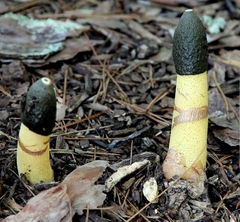
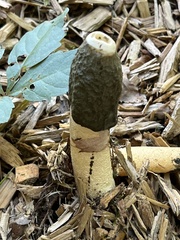
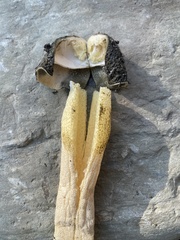
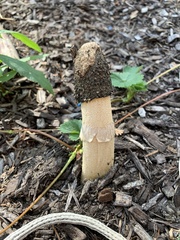
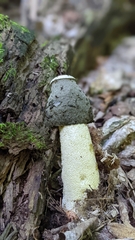
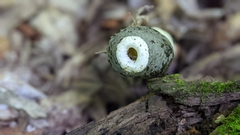
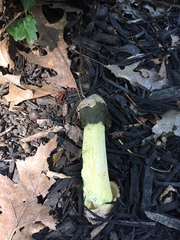
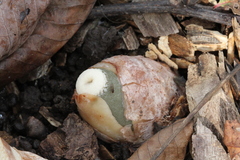
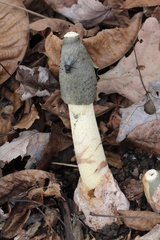
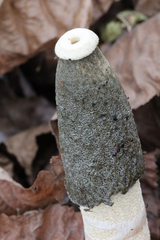
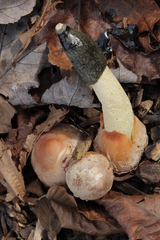
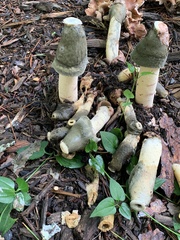
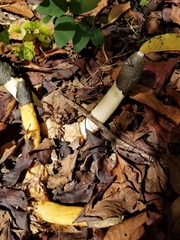
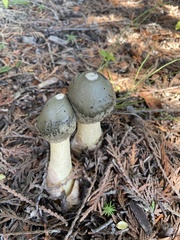
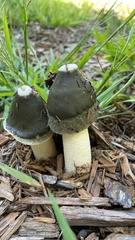
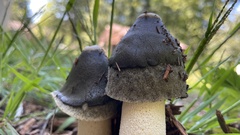
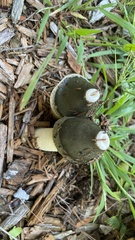
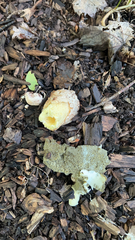
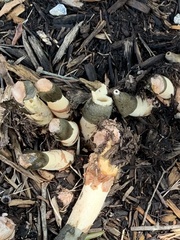
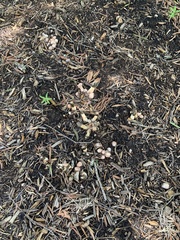
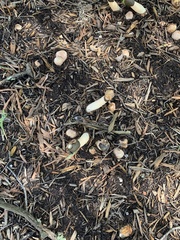
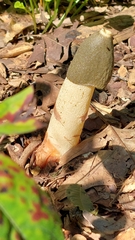
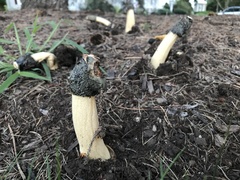
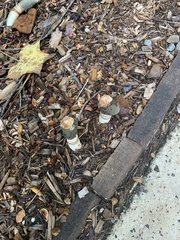
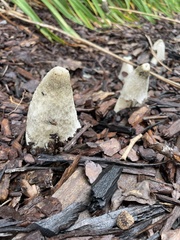
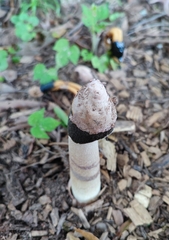
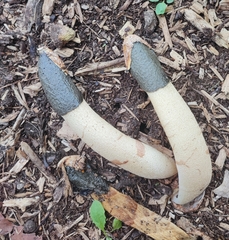
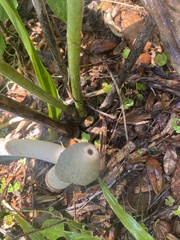
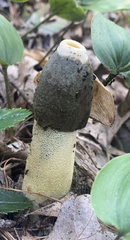
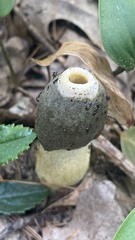
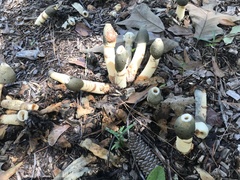
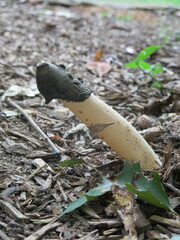
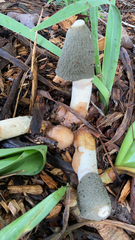
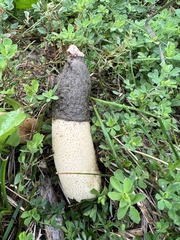
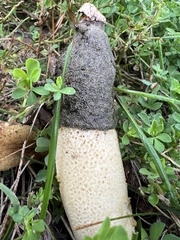
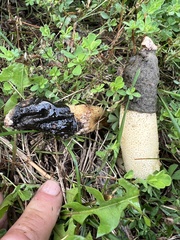
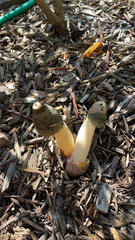
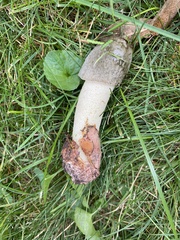
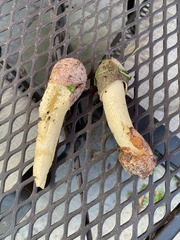
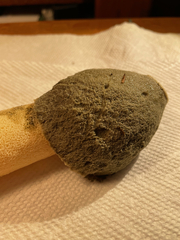
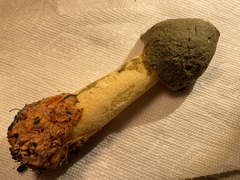
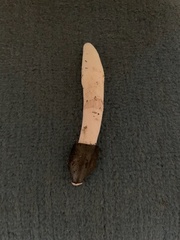
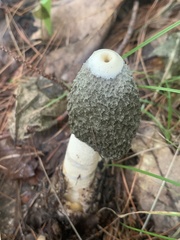
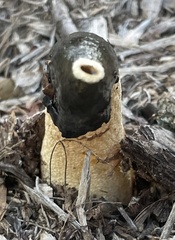
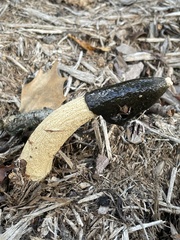
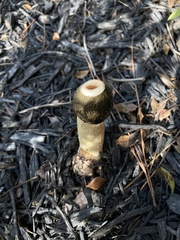
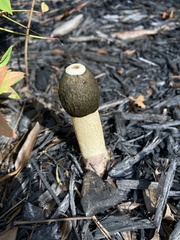
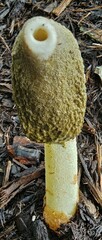
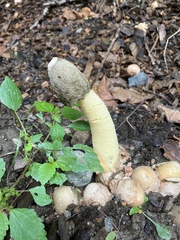
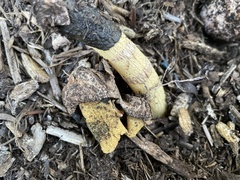
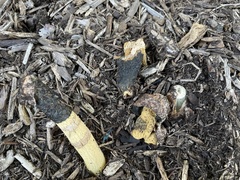
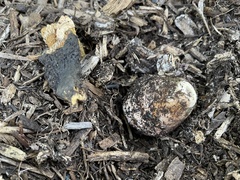
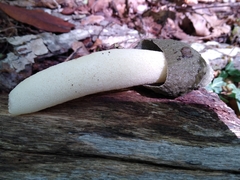
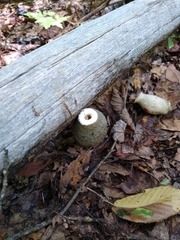
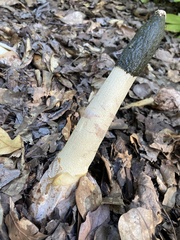
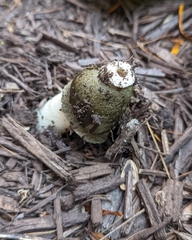
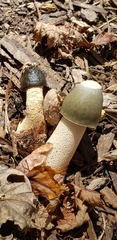
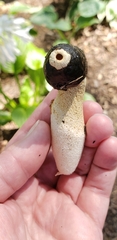
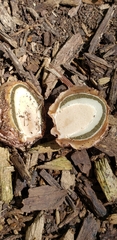
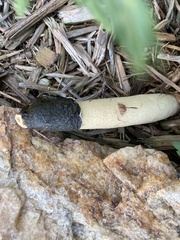
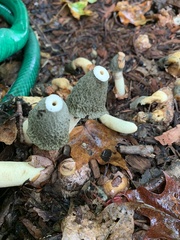
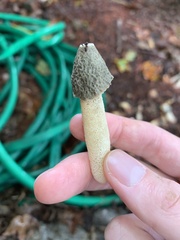
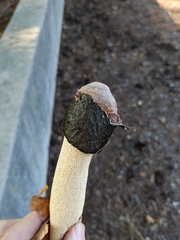
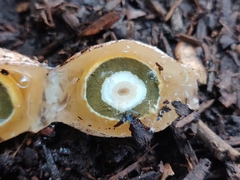
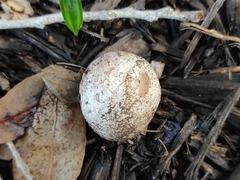
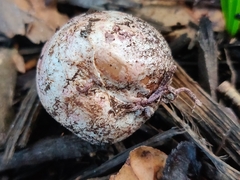
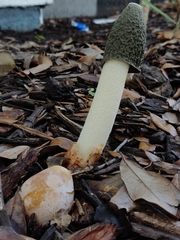
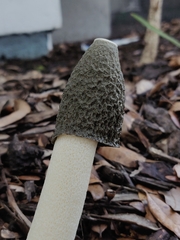
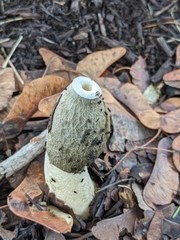
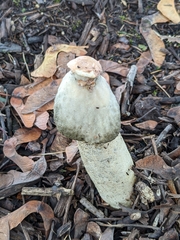
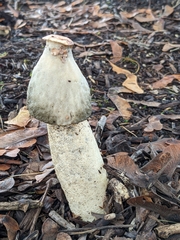
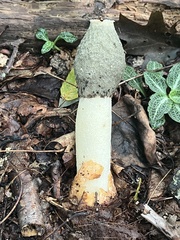
Phallus ravenelii, commonly known as Ravenel's stinkhorn, is a fungus in the Phallaceae (stinkhorn) family. It is found in eastern North America. Its mushrooms commonly grow in large clusters and are noted for their foul odor and phallic shape when mature. It is saprobic, and as such it is encountered in a wide variety of habitats rich in wood debris, from forests to mulched gardens or sawdust piles in urban areas. It appears from August to October. The fruit body emerges from a pink or lavender-colored egg to form a tall, cylindrical, hollow and spongy white stalk with a bell-shaped cap. The remains of the egg persist as a white to pink or lilac volva at the base of the stalk. The cap is covered in a foul-smelling olive-green spore slime, which attracts insects that help to spread the spores. Sometimes, the cap has a "veil" attached—a thin membrane that hangs underneath. The lack of a roughly ridged and pitted cap differentiates it from the closely related Phallus impudicus. The fungus is named after Henry William Ravenel, a botanist who first discovered it in 1846, though it remained undescribed until 1873. It is considered to be an edible mushroom while in its egg form.
...Phallus ravenelii in languages:
- English
- Ravenel's stinkhorn
- French
- Satyre puant de Ravenel
Images from inaturalist.org observations:
We recommend you sign up for this excellent, free service.
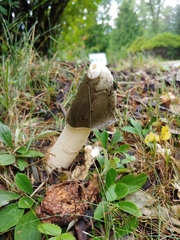
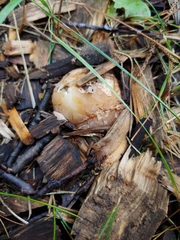
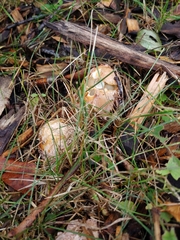
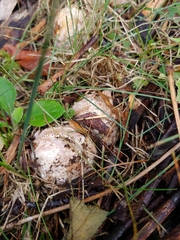
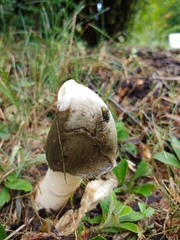
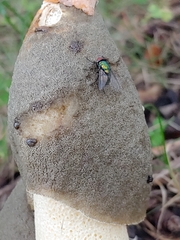
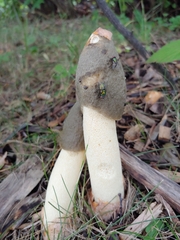
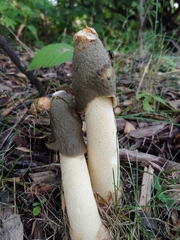
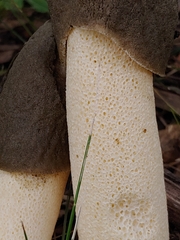
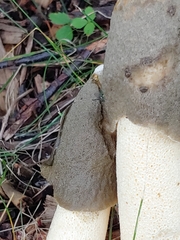
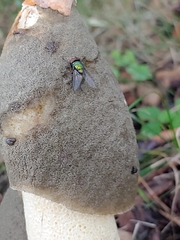
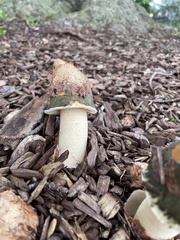
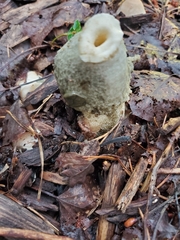
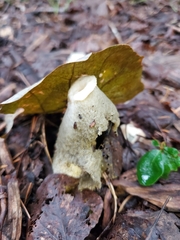
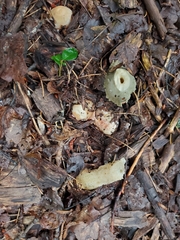
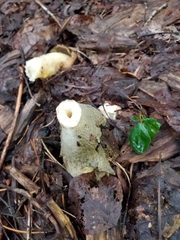
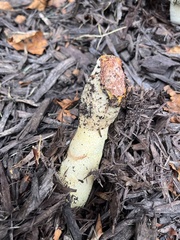
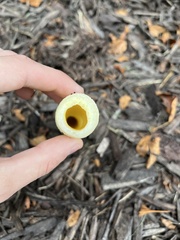
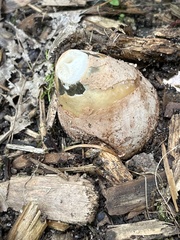
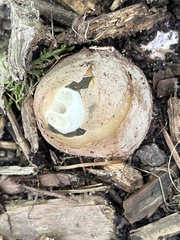
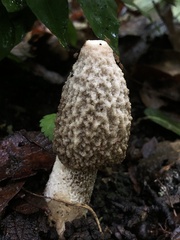
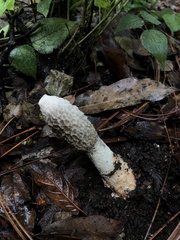
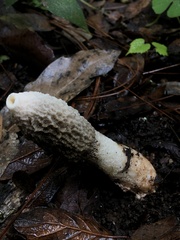
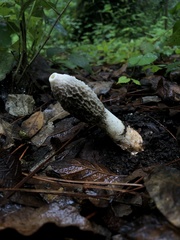


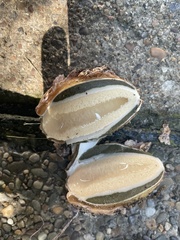
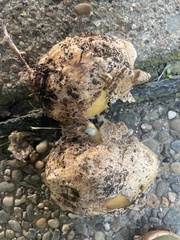
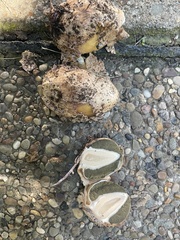
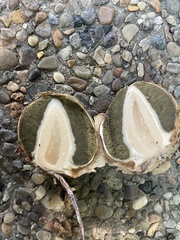


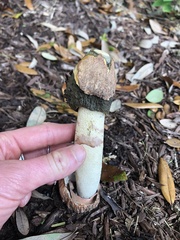
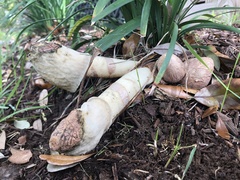
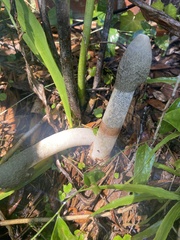
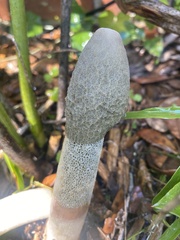
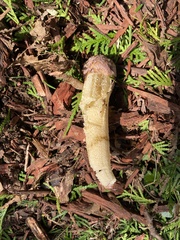
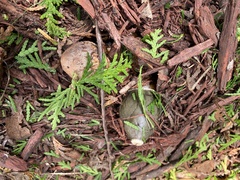
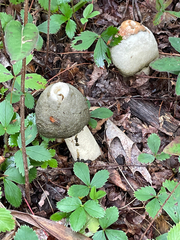
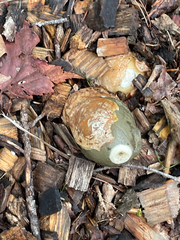
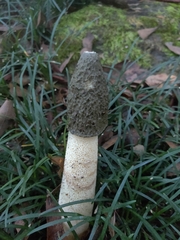
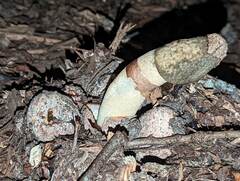
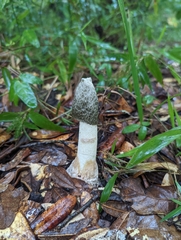
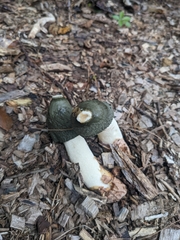
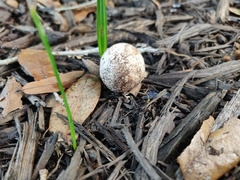
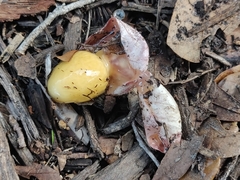
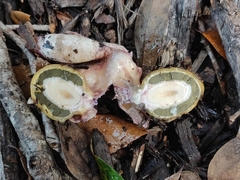
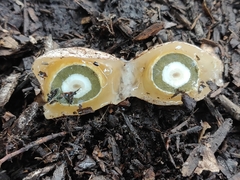
Parent Taxon
Sibling Taxa
- Dictyophora bicampanulata
- Dictyophora braunii
- Phallus acaulis
- Phallus amurensis
- Phallus anastomosis
- Phallus annulatus
- Phallus armeniacus
- Phallus atrovolvatus
- Phallus aurantiacus
- Phallus aureolatus
- Phallus aureus
- Phallus brasiliensis
- Phallus callichrous
- Phallus calongei
- Phallus campanulatus
- Phallus chiangmaiensis
- Phallus cinnabarinus
- Phallus coronatus
- Phallus cremeo-ochraceus
- Phallus daemonum
- Phallus denigricans
- Phallus dongsun
- Phallus drewesii
- Phallus duplicatus
- Phallus echinovolvatus
- Phallus flavocostatus
- Phallus formosanus
- Phallus fuscoechinovolvatus
- Phallus glutinolens
- Phallus granulosodenticulatus
- Phallus hadriani
- Phallus haitangensis
- Phallus impudicus
- Phallus indusiatus
- Phallus lutescens
- Phallus luteus
- Phallus mengsongensis
- Phallus merulinus
- Phallus minusculus
- Phallus multicolor
- Phallus purpurascens
- Phallus pygmaeus
- Phallus ravenelii
- Phallus rigidiindusiatus
- Phallus rubicundus
- Phallus rubrovolvatus
- Phallus rugulosus
- Phallus serratus
- Phallus squamulosus
- Phallus tenuissimus
- Phallus ultraduplicatus
Top Observation Places
- Elgin
- Hartford
- West Hartford
- La Crosse
- Portland
- Bayside
- New Orleans
- Edison
- New Brunswick
- Piscataway
- Athens
- Charleston
- Mount Pleasant
- Asheville
- Huntersville
- Greenville
- Pittsburgh
- Gainesville
- Tallahassee
- Lansing
- Abington
- Belmont Cragin
- Evanston
- Logan Square
- West Ridge
- Portage Park
- Skokie
- Irving Park
- Albany Park
- Atascocita
- Houston
- Madison
- Silver Spring
- Rockville
- Bethesda
- Alafaya
- Naperville
- The Woodlands
- Minneapolis
- Saint Paul
- Brooklyn Park
- Eagan
- West Coon Rapids
- Coon Rapids
- Blaine
- Edina
- New York City
- Manhattan
- The Bronx
- Yonkers